

The odor you smell is usually not sitting on the surface
A pet accident can feel like a quick-cleanup problem: blot it, spray it, shampoo the carpet, and move on. But when that same smell returns—especially on humid days, after the heat comes on, or when you walk into the room after being away—the contamination is usually still below the surface.
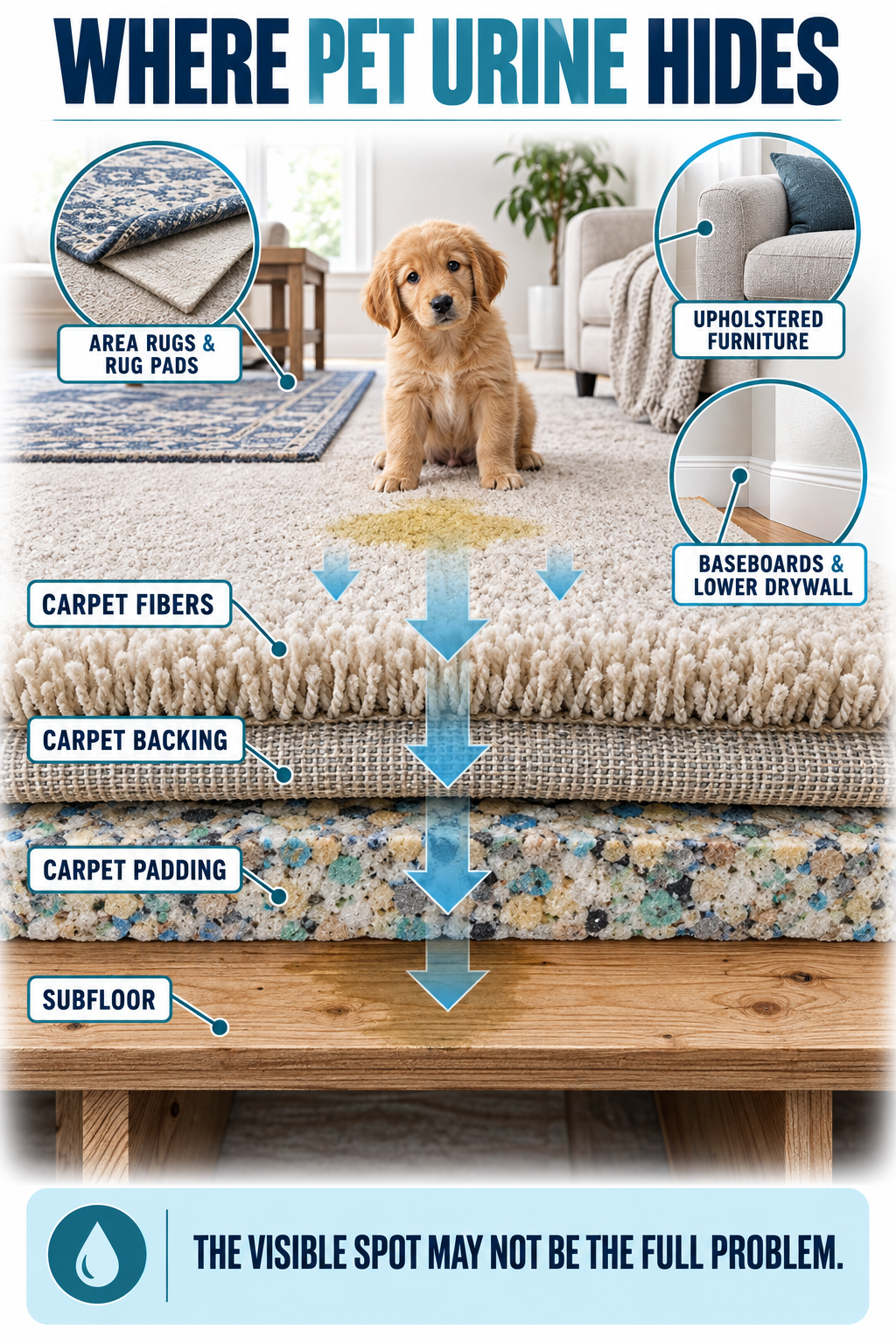
Pet urine can travel farther than people expect. It may wick through carpet fibers into the backing and padding, reach the subfloor, soak into upholstery, or spread beneath baseboards. A scented cleaner may make the room smell better temporarily, but it does not necessarily remove the material causing the odor.
That is why persistent pet urine odor needs an odor-remediation mindset, not just a cleaning product.
Also Read Why Does My House Smell Worse When the Air Conditioner Turns On?
Why pet urine odor returns after you clean
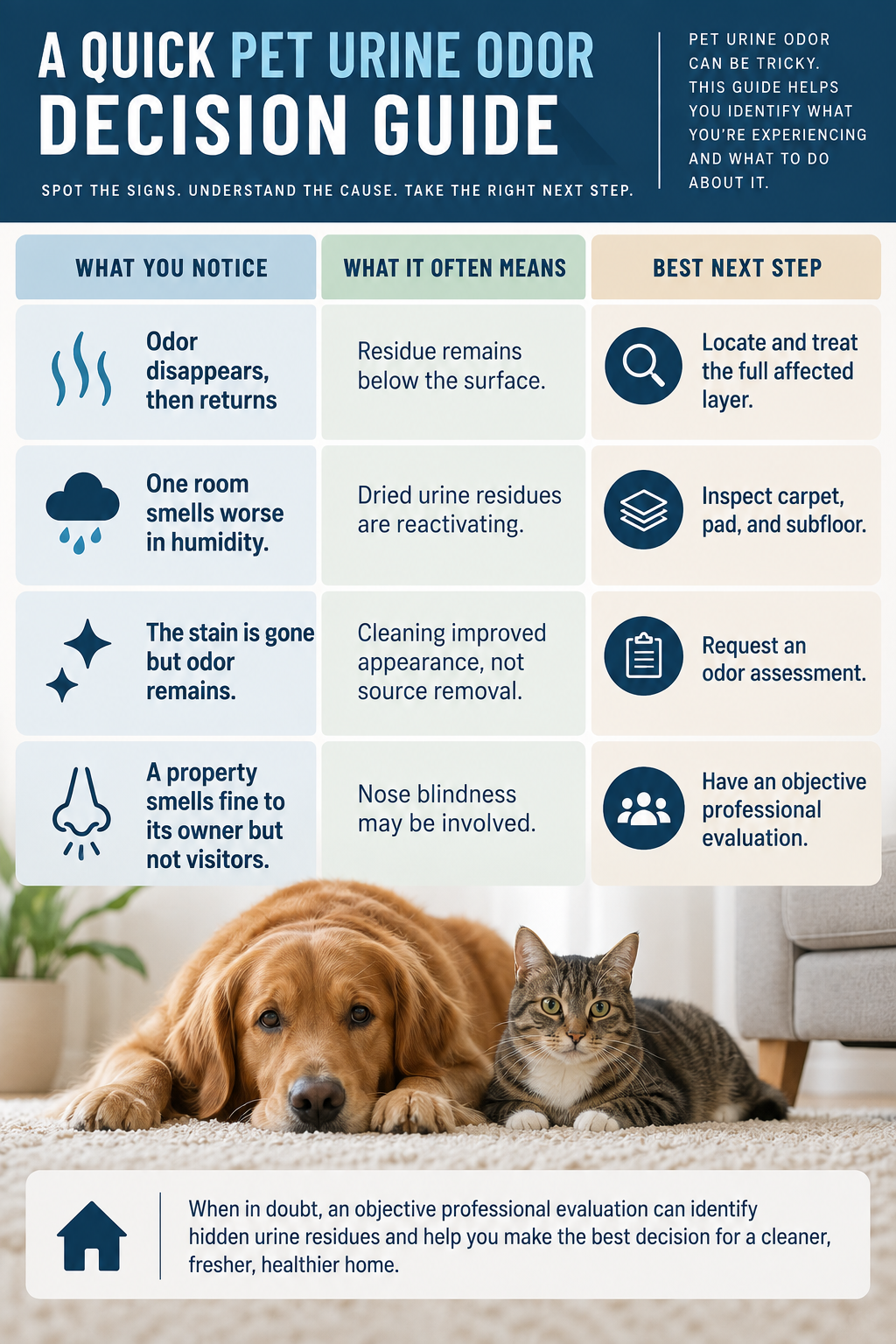
Fresh urine is not the same as aged urine. As urine dries, the water evaporates and leaves concentrated residues behind. In a humid Carolina home, moisture in the air can reactivate those residues, making the odor noticeable again.
The problem can become even more stubborn when:
- Multiple accidents occurred in the same area.
- A previous tenant or homeowner had pets.
- Carpet was cleaned but the pad or subfloor was never treated.
- A cat repeatedly marked the same location.
- Urine reached porous materials such as wood, concrete, grout, or upholstered furniture.
In other words, an odor that “comes back” is not being dramatic. It is evidence that the source was not fully reached.
Also Read Why Does My House Smell Musty Even When It’s Clean?
The hidden places urine can settle
The visible stain is often only the starting point. Depending on the surface and amount of liquid, urine contamination may be found in:
- Carpet fibers and backing
- Carpet padding
- Wood or concrete subfloors
- Area rugs and rug pads
- Upholstered furniture and mattresses
- Baseboards, trim, and the lower section of drywall
- HVAC airflow paths that move odor from room to room
That is why the first step in professional pet urine odor removal is locating the full affected area—not guessing based only on what the eye can see.
Why household products often fall short
Home remedies can help with a very fresh, small accident when used quickly and correctly. They are far less reliable for an older odor, a recurring problem, or an unknown contamination history.
Common limitations include:
Fragrance products mask rather than remove. A fresh scent can coexist with urine odor. Once the fragrance fades, the original issue becomes obvious again.
Surface cleaners do not always penetrate deeply enough. If the contamination is in the padding or subfloor, treating only the carpet face leaves the source in place.
Too much moisture can enlarge the affected area. Over-wetting a carpet can push soluble residues deeper or outward.
Steam alone is not a complete odor plan. Heat and moisture can make odor more noticeable if the source remains.
The goal is not to create a stronger competing smell. The goal is to remove or neutralize the odor-causing residues at every affected layer.
Also Read 10 Signs Hidden Mold Is Growing Behind Your Walls | Carolina Odor Pros
Carolina Odor Pros’ source-first approach
Persistent pet urine odor requires a process matched to the material, depth, and extent of contamination. Carolina Odor Pros begins by assessing where the odor is coming from and how far it has traveled. That may include odor investigation tools, moisture-aware inspection, and targeted evaluation of carpet, padding, flooring, and other porous materials.
From there, the remediation plan can be designed around the actual source—not a one-size-fits-all spray-and-hope approach. Depending on the findings, treatment may involve targeted cleaning, treatment of affected materials, odor-neutralization methods, or recommendations for material removal when contamination is too extensive to preserve.
This matters for homeowners, landlords, property managers, real-estate professionals, and vehicle owners alike. A property can look clean and still fail the moment a buyer, guest, or prospective tenant catches that unmistakable odor at the door.
Services
When to bring in a professional
It is time to call for professional pet odor remediation when the odor returns after cleaning, the history of the property is unknown, multiple pets have used the area, or you are preparing a home or rental for sale, occupancy, or inspection.
Professional help is especially valuable when you need confidence—not simply a room that smells better for a day or two. The right solution protects the comfort of the people who live there and helps prevent a lingering odor from affecting a lease, sale, guest review, or first impression.
Pet Odor Removal
Stop covering the problem. Find the source.
Pet accidents happen. A lasting urine odor does not have to become part of the home.
If you can still smell pet urine after cleaning—or you are worried it is hiding beneath the surface—contact Carolina Odor Pros for a professional assessment. We help identify the true source of the odor and recommend a remediation plan built to eliminate it rather than simply cover it up.
Odor Removal Services
Don’t Let a Hidden Pet Odor Become a Lasting Problem
Blotting a fresh accident quickly is a smart first step—but if the odor returns, gets worse in humidity, or lingers after cleaning, the source may be deeper than the carpet surface. Pet urine can settle into padding, subflooring, upholstery, and other porous materials where ordinary cleaning cannot fully reach it.
Carolina Odor Pros helps homeowners, landlords, and property managers identify where odor is hiding and build a remediation plan around the true source. Don’t keep covering the problem with fragrance or hoping it will fade on its own. Contact Carolina Odor Pros today for a professional odor assessment and take the first step toward a home that smells as clean as it looks.

Frequently Asked Questions
Can pet urine smell return after carpet cleaning?
Yes. Carpet cleaning may improve the surface while urine residue remains in the backing, pad, or subfloor. Humidity can make the remaining odor noticeable again.
Why does my house smell like urine only when it is humid?
Humidity can reactivate dried urine residues, allowing odor compounds to become more noticeable in the air.
Can old pet urine be removed from carpet?
Often, yes—but the right approach depends on how deeply the urine traveled and which materials are affected. Severe contamination may require treatment beyond the carpet surface.
Do air fresheners remove pet urine odor?
No. Air fresheners may cover the smell temporarily, but they do not remove the source of the odor.
Does vinegar remove cat urine smell?
Vinegar may reduce a fresh, small odor for some surfaces, but it is not a reliable solution for old or deep contamination. Always check manufacturer guidance before using any product on carpet, stone, or upholstery.
Can urine soak through carpet into the subfloor?
Yes. Larger or repeated accidents can travel through carpet and padding into porous subfloor materials.
How do professionals find pet urine in a house?
Professionals inspect the property and use targeted odor-investigation methods to identify affected areas and determine how far contamination has traveled.
Why can’t the homeowner smell the pet odor anymore?
People can become accustomed to odors in their own environment, a phenomenon often called nose blindness. Visitors may notice the odor immediately.
Should I replace carpet if it has pet urine odor?
Not always. Replacement depends on the severity and location of contamination. An assessment can determine whether targeted remediation is appropriate or whether material removal is the more dependable option.
Is professional pet odor removal worth it before selling a home?
Yes. Pet urine odor can affect a buyer’s first impression and may raise concerns about hidden damage. Addressing the source before showings helps the property present more confidently.
Previous Article: Why Does My House Smell Worse When the Air Conditioner Turns On?
Next Article: What Really Happens When Pet Urine Soaks Into Carpet and Flooring?