

What's Really Going on Behind Those Walls When You're Not Looking.
You walk into your home every day and probably don't think twice about what's happening behind your walls. After all, if you can't see a problem, it's easy to assume everything is fine.
Unfortunately, that's exactly how hidden mold becomes a serious issue.
At Carolina OdorPros, we frequently inspect homes where mold has been growing quietly for months—or even years—without ever appearing on the painted surface. By the time homeowners notice visible mold, the underlying moisture problem has often been feeding microbial growth for a considerable amount of time.
The good news?
Buildings usually provide warning signs long before mold becomes visible.
Understanding those early indicators can help homeowners identify problems sooner, reduce repair costs, and improve indoor environmental quality before minor moisture issues develop into major structural concerns.
Also Read 📙https://carolinaodorpros.com/why-does-my-house-smell-musty-even-when-its-clean/
Understanding Why Mold Grows Inside Walls
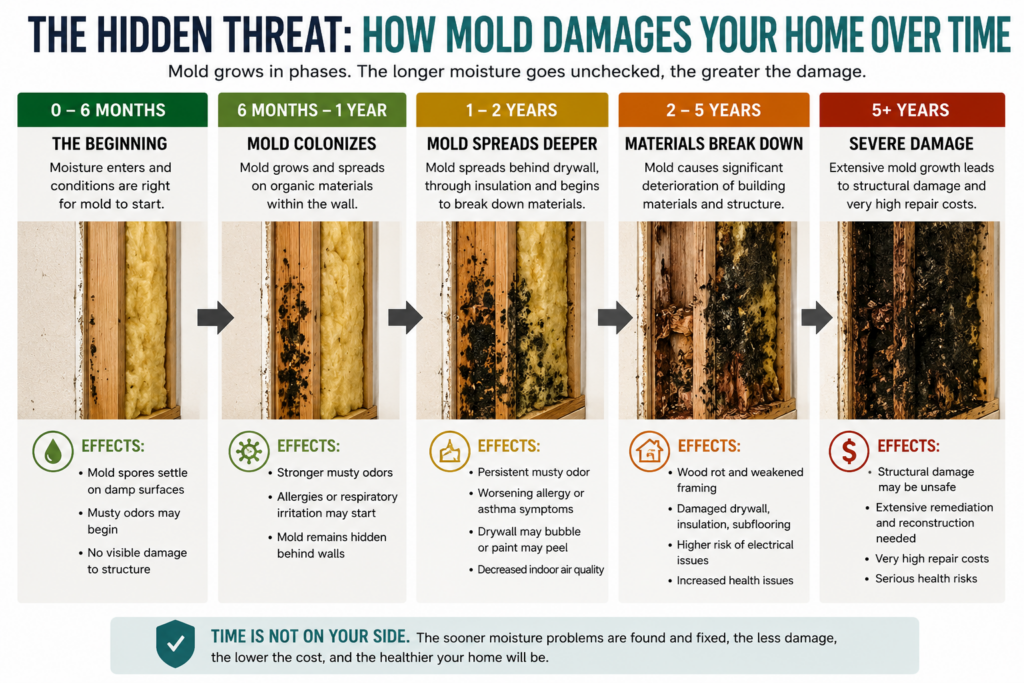
Many people picture mold as something that suddenly appears on drywall after a flood.
In reality, mold growth is usually much slower—and much more complex.
Fungal spores are naturally present in virtually every indoor and outdoor environment. On their own, these microscopic spores are not unusual. What determines whether mold begins growing isn't the presence of spores—it's the availability of moisture.
Scientists often describe mold growth as requiring four primary conditions:
- Moisture
- Organic food source
- Suitable temperature
- Time
Modern homes provide all four.
Drywall paper contains cellulose.
Wood framing is organic.
Dust provides additional nutrients.
Indoor temperatures remain comfortable year-round.
The only missing ingredient is moisture.
When water enters a wall cavity through a plumbing leak, roof leak, condensation, flashing failure, or elevated humidity, mold colonies can begin developing in as little as 24 to 48 hours under favorable conditions.
What's remarkable is that these colonies often remain completely hidden.
🏡Also Read What Are The Health Risks Associated With Mold?
The Hidden Environment Inside Your Walls
Most homeowners imagine walls as empty spaces.
They're not.
Wall cavities create enclosed microenvironments where temperature, humidity, and airflow behave very differently than the air inside your living space.
Air movement is limited.
Sunlight never reaches the interior.
Moisture evaporates slowly.
Insulation traps humidity.
This creates an ideal ecosystem for fungal growth.
Even small plumbing leaks that produce only a few drops per hour can maintain enough moisture to support mold growth for extended periods without creating obvious water damage on the painted surface.
This is one reason experienced inspectors rarely rely on visual observations alone.
Why You Often Smell Mold Before You See It
One of the biggest misconceptions about mold is that the odor comes from the mold itself.
It doesn't.
The characteristic earthy, damp, "old basement" smell is primarily produced by compounds known as Microbial Volatile Organic Compounds (mVOCs).
🦨Mold Testing & Inspection
What Are Microbial Volatile Organic Compounds?
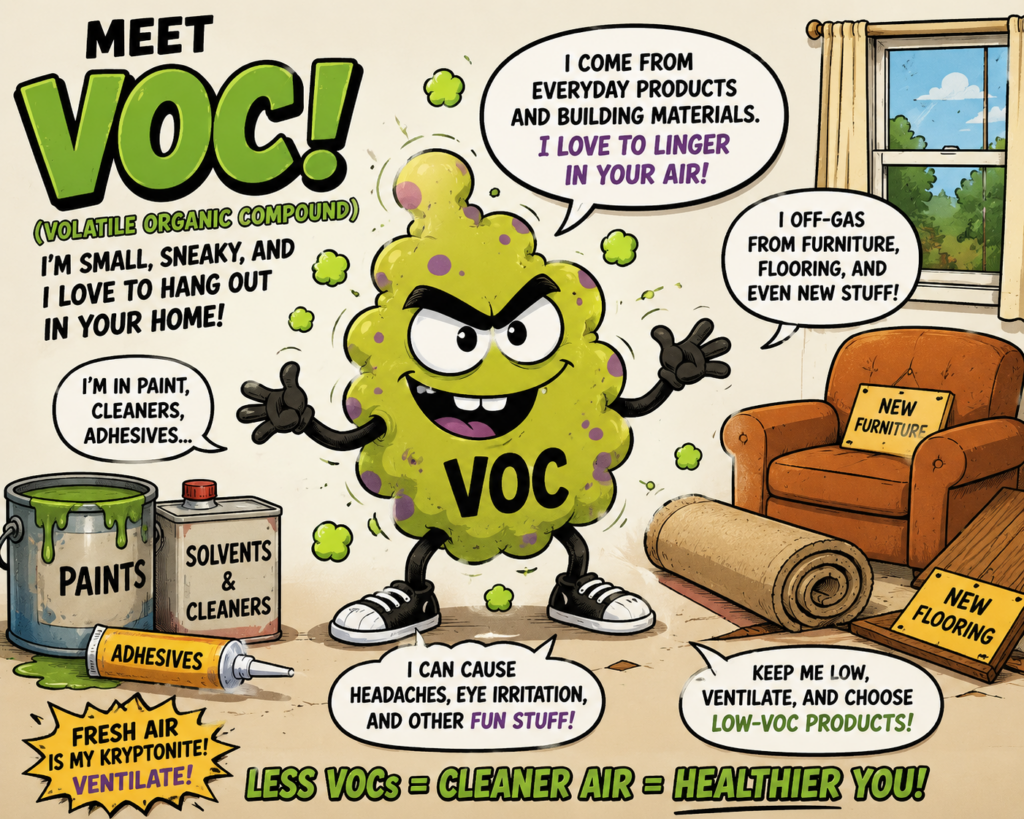
As mold colonies metabolize organic materials, they release tiny gaseous byproducts into the surrounding air.
These gases are known as microbial volatile organic compounds.
Think of them as similar to the aroma released when bread bakes or coffee brews.
The smell isn't the object itself.
It's the chemicals being released during biological activity.
Different fungal species produce different combinations of these compounds, which is why mold odors can vary from:
- Earthy
- Damp
- Woody
- Musty
- Sweet
- Sour
- Stale
The human nose can detect some of these compounds at remarkably low concentrations.
In many homes, occupants notice the odor weeks—or even months—before visible staining appears.
Why the Smell Comes and Goes
One confusing aspect of hidden mold is that homeowners often report the odor isn't constant.
That's completely normal.
Odor intensity changes because of:
- Indoor humidity
- HVAC operation
- Air pressure differences
- Outdoor weather
- Temperature
- Ventilation patterns
For example, many people notice stronger odors:
- After rainfall
- During humid summer mornings
- When the air conditioning first starts
- After returning home from vacation
- When doors or windows remain closed
These changing environmental conditions alter how mVOCs move through the home.
The mold colony itself may not be changing much at all.
Sign #1 — A Persistent Musty Odor That Never Quite Goes Away

Perhaps the earliest warning sign of hidden mold is a persistent odor that seems impossible to eliminate.
You vacuum.
You clean.
You use air fresheners.
You wash fabrics.
Yet the smell keeps returning.
That's because fragrance products don't remove microbial gases.
They simply compete with them.
A persistent musty odor often indicates that microbial activity is occurring somewhere moisture continues to exist.
Importantly, the odor may seem strongest:
- Near electrical outlets
- Around baseboards
- Close to HVAC return vents
- Along exterior walls
- Near plumbing walls
- Inside closets
This happens because air naturally moves through tiny openings in wall assemblies.
As pressure changes inside the home, those invisible air currents can carry mVOCs from hidden wall cavities into occupied rooms.
The odor isn't necessarily strongest where the mold is growing.
It's strongest where air is escaping.
Understanding this distinction is one reason experienced inspectors don't rely solely on their noses when locating hidden contamination.
Sign #2 — Paint That Begins Bubbling, Peeling, or Cracking Without an Obvious Cause
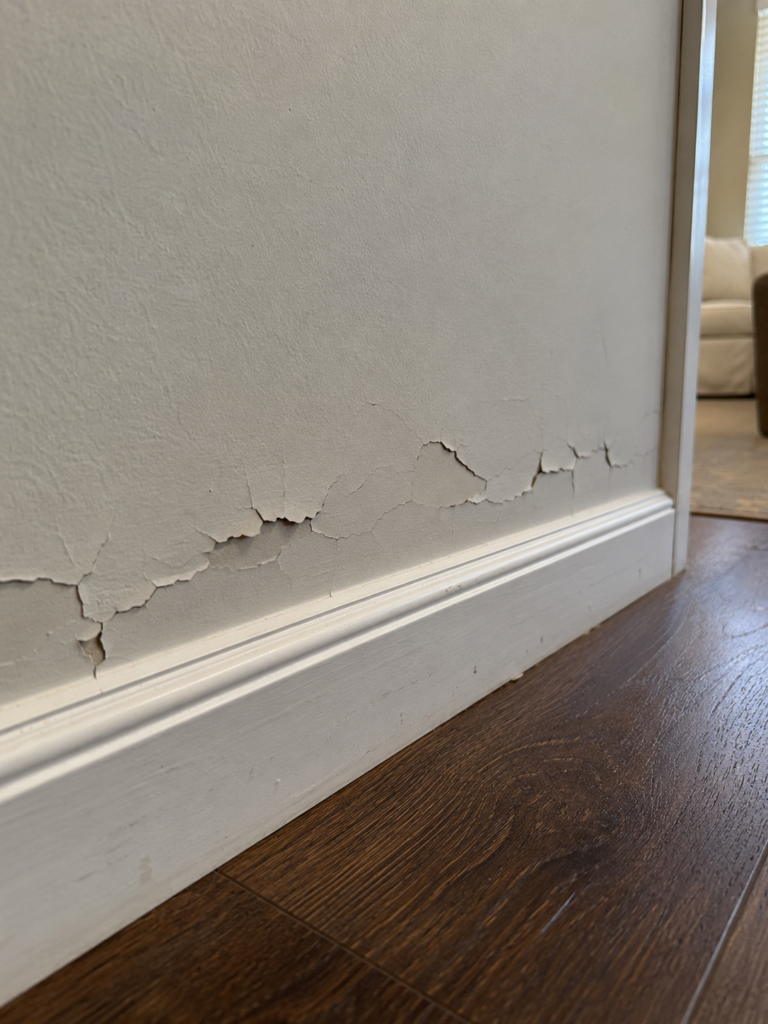
Many homeowners assume peeling paint automatically means poor paint quality.
Sometimes it does.
But persistent bubbling or peeling in isolated areas can also indicate moisture migrating from behind the wall.
Paint is designed to adhere to a dry, stable surface.
When moisture accumulates within drywall or plaster, water vapor begins pushing outward.
Over time, this internal moisture pressure weakens the bond between the paint film and the wall surface.
The result may include:
- Small bubbles
- Hairline cracking
- Soft drywall
- Peeling edges
- Localized discoloration
What's important is that these changes often occur before visible mold reaches the painted surface.
The mold may still be actively growing on the back side of the drywall while the front appears mostly clean.
This is one reason simply scraping and repainting the area rarely solves the problem.
Unless the moisture source is corrected, the deterioration usually returns.
Sign #3 — One Room Always Feels More Humid Than the Others
Have you ever walked from one room into another and thought:
"Why does this room always feel damp?"
Maybe the thermostat says the temperature is the same throughout the house, yet one bedroom, office, or hallway consistently feels heavier, stickier, or less comfortable.
That sensation shouldn't be ignored.
While high humidity throughout an entire home can result from seasonal weather or an undersized HVAC system, localized humidity often points to a hidden moisture source inside the building envelope.
Your House Has Its Own Weather System

Every home experiences continuous air movement.
Warm air rises.
Cool air sinks.
Pressure differences develop between rooms.
Your HVAC system constantly changes those pressure relationships every time it cycles on and off.
Building scientists refer to this as air transport, and it's one of the primary ways moisture moves throughout a structure.
If moisture is trapped inside a wall cavity, some of that moisture migrates into adjacent living spaces as water vapor. Even though the leak itself may be hidden, the room can begin feeling noticeably more humid than surrounding areas.
Homeowners often notice:
- A bedroom that always feels clammy.
- An upstairs hallway that's uncomfortable during summer.
- A closet that never seems completely dry.
- A home office with a persistent "heavy" feeling.
These subtle changes frequently occur long before visible mold appears.
💦Odor Removal Services
The Hidden Role of Dew Point
One of the least understood concepts in residential moisture problems is the dew point.
Simply put, the dew point is the temperature at which airborne moisture condenses into liquid water.
If warm, humid indoor air reaches a cooler surface inside your wall assembly, condensation forms.
Imagine pouring iced tea into a glass on a hot summer day.
Water droplets appear on the outside—not because the glass is leaking, but because moisture from the surrounding air condenses on the cold surface.
The same process can occur inside your walls.
Common cold surfaces include:
- Exterior sheathing
- Metal framing components
- Plumbing lines carrying cold water
- Air-conditioning ducts
- Window framing
- Structural fasteners
Repeated condensation may not create enough water to drip onto your floor, but it can provide enough moisture to support fungal growth over time.
Thermal Bridging: When Your Wall Becomes a Moisture Magnet
Another phenomenon professionals evaluate is thermal bridging.
Thermal bridging occurs when materials like wood studs, steel framing, or concrete conduct heat differently than surrounding insulation.
These areas become cooler than adjacent materials, making them more likely to collect condensation under the right conditions.
This explains why mold sometimes develops in straight vertical patterns following wall studs or around windows—even when there has never been a plumbing leak.
The moisture originates from condensation rather than liquid water intrusion.
Without specialized equipment such as infrared imaging and moisture mapping, these conditions can remain hidden for years.
📍Cornelius, NC 📍Concord, NC 📍Belmont, NC
Sign #4 — Your Allergies Improve When You Leave Home

Many people associate mold exposure with dramatic symptoms.
The reality is usually much more subtle.
One of the most common clues homeowners report is this:
"I feel better when I'm away from the house."
Although many environmental factors can influence respiratory health, recurring symptoms that consistently improve outside the home may indicate an indoor environmental issue worth investigating.
Possible symptoms can include:
- Nasal congestion
- Sneezing
- Itchy eyes
- Persistent coughing
- Throat irritation
- Headaches
- Fatigue
- Worsening asthma symptoms in susceptible individuals
It's important to recognize that these symptoms do not diagnose mold. Dust mites, pollen, pet dander, poor ventilation, elevated humidity, and numerous other indoor air quality issues can produce similar complaints.
This is why professional inspections focus on gathering objective evidence rather than relying solely on symptoms.
🥸Resources
🦠Mold Remediation Services
Why Air Testing Doesn't Always Find Hidden Mold
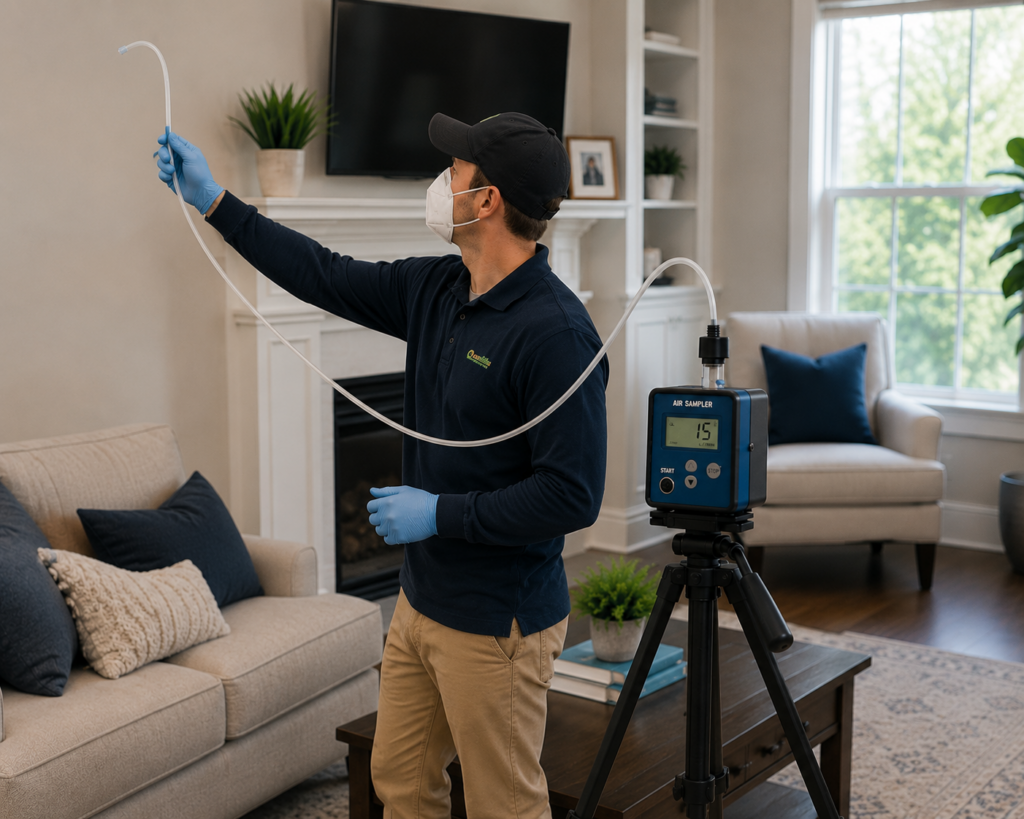
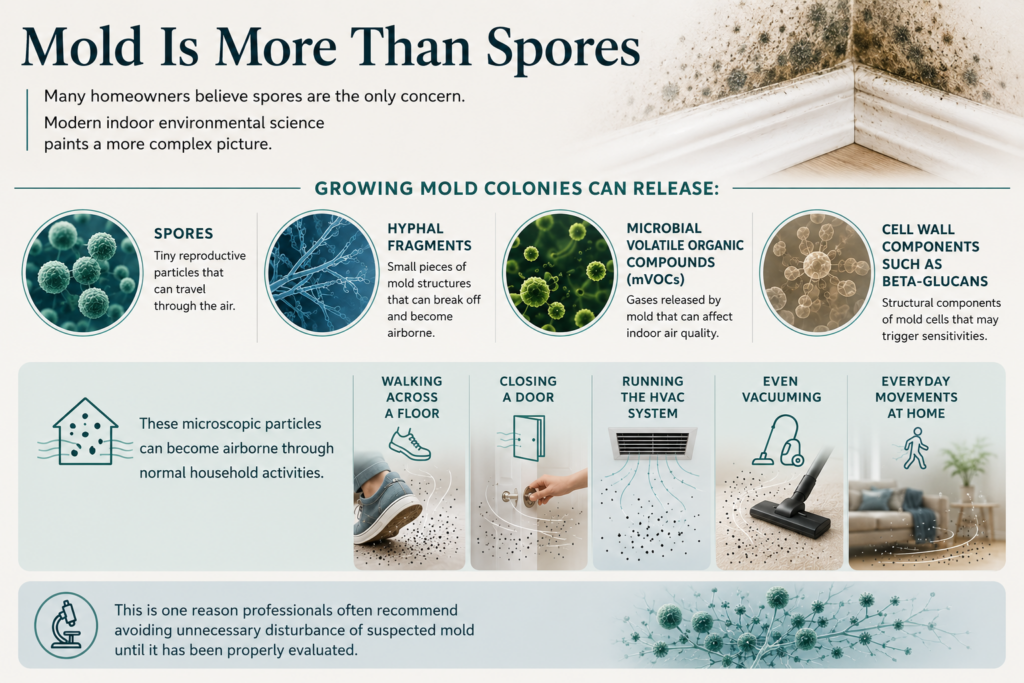
A surprising fact is that air sampling can sometimes appear normal even when hidden mold exists.
Why?
Because mold doesn't continuously release spores at the same rate.
Spore concentrations fluctuate based on:
- Humidity
- Air movement
- HVAC operation
- Recent disturbances
- Weather conditions
- Time of day
If a hidden colony remains sealed inside a wall cavity, relatively few spores may enter the occupied space.
That's why experienced investigators combine multiple tools, including:
- Moisture mapping
- Thermal imaging
- Building history
- Visual inspection
- Humidity measurements
- Airflow evaluation
- Selective sampling when appropriate
Looking at the building as a complete system often produces a far more accurate picture than relying on one test alone.
📍Huntersville, NC
Sign #5 — Water Stains That Keep Coming Back
One of the clearest indicators of an unresolved moisture issue is a stain that repeatedly returns.
Perhaps you've noticed a faint yellow ring on a ceiling.
Maybe a wall develops a light brown discoloration every few months.
You clean it.
Prime it.
Repaint it.
Everything looks perfect.
Then, six months later...
It's back.
That's your house trying to tell you something.
Stains Are Symptoms, Not the Problem
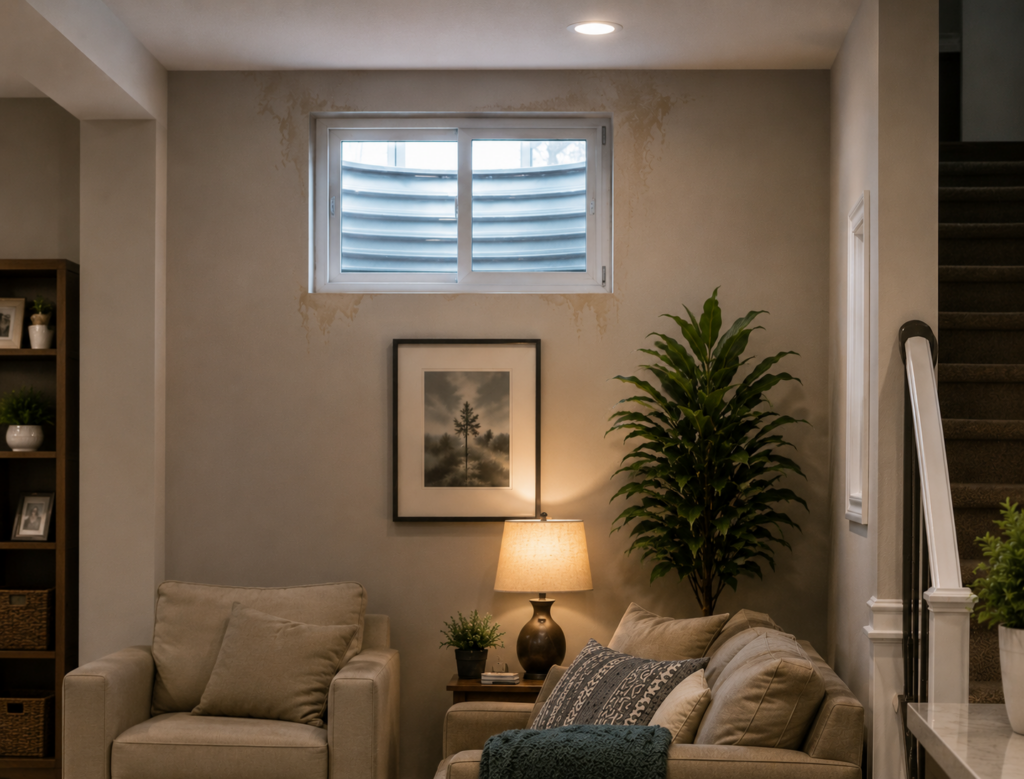
Water stains rarely represent the actual issue.
Instead, they're evidence that moisture continues moving through building materials.
Possible sources include:
- Roof leaks
- Window flashing failures
- Plumbing leaks
- Condensation inside wall cavities
- Ice dam damage
- Foundation moisture intrusion
Until that source is identified and corrected, cosmetic repairs only hide the evidence temporarily.
💦Water Damage Removal
The Difference Between Active and Historical Damage
Not every stain indicates an active leak.
Some stains are simply reminders of an old incident that has completely dried.
The challenge is determining which is which.
Professionals evaluate several factors:
- Moisture content of surrounding materials
- Relative humidity
- Temperature differentials
- Material deterioration
- Staining patterns
- Building history
A moisture meter may reveal that a stain is completely dry and stable.
Or it may show elevated moisture hidden beneath freshly painted drywall, indicating an active problem that requires attention.
Without measuring, it's impossible to know with confidence.
📍Matthews, NC 📍Kings Mountain, NC 📍Kannapolis, NC 📍Indian Trail, NC
Why Mold Doesn't Always Grow on the Surface
Many homeowners expect mold to appear exactly where the moisture is visible.
Often, it doesn't.
Consider a small plumbing leak inside a wall.
Gravity carries water downward through insulation and framing.
Airflow moves moisture sideways.
Capillary action allows porous materials to draw water horizontally.
As a result, mold may develop several feet away from the original leak.
This is one reason professional inspections frequently uncover hidden growth in locations homeowners never suspected.
📍Mount Holly, NC 📍Mooresville, NC 📍Monroe, NC 📍Mint Hill, NC
Carolina Homeowner Spotlight
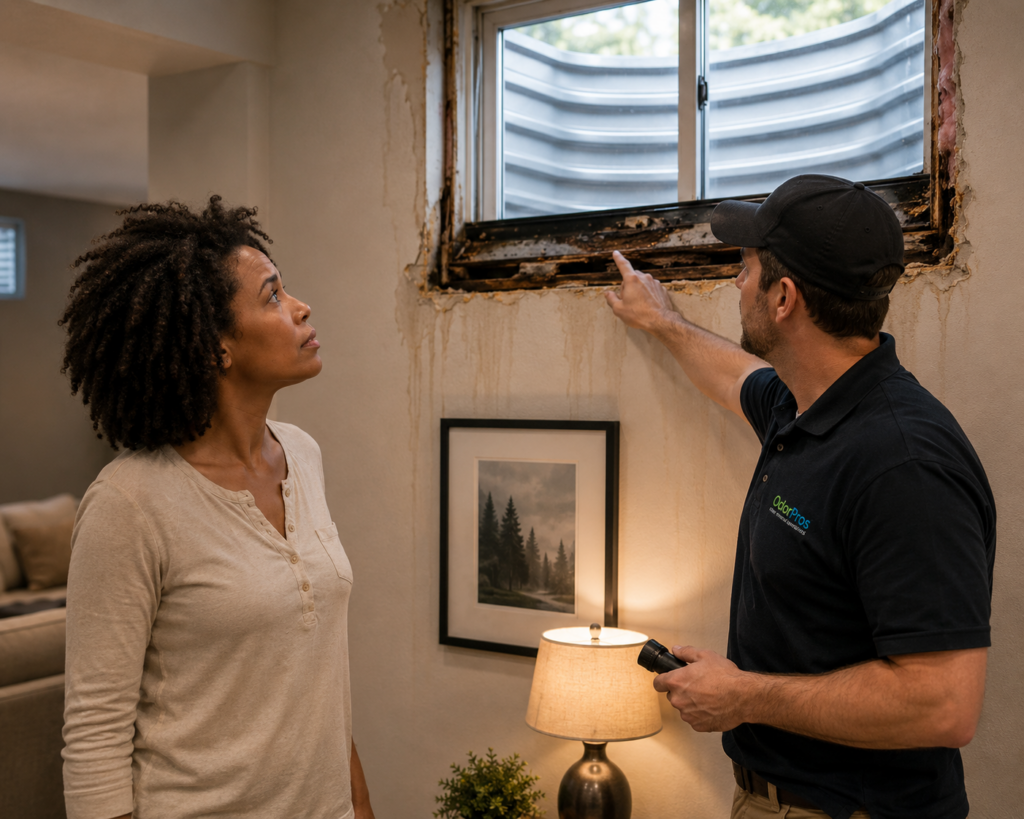
A Charlotte-area homeowner contacted Carolina OdorPros after repainting the same dining room wall three times in two years.
There was no visible mold.
Only a faint stain that slowly reappeared after each repainting.
The room also had a slight earthy odor during humid weather, but because there had never been a major leak, the homeowner assumed it was simply an older house.
Using moisture mapping and thermal imaging as part of a comprehensive investigation, the inspection identified elevated moisture behind the exterior wall.
The culprit wasn't a burst pipe.
It was deteriorated window flashing that allowed rainwater to enter the wall assembly during storms.
Over time, moisture accumulated inside the insulated cavity, creating conditions favorable for hidden mold growth.
By identifying both the moisture intrusion and the affected building materials, the homeowner was able to address the underlying cause rather than continuing an endless cycle of repainting.
The lesson is simple:
Visible damage is often the last chapter of a much longer story.
Also Read 📙What Do Professionals Use For Mold Remediation?
Sign #6 — The Musty Odor Gets Stronger After It Rains
One of the most overlooked clues that hidden mold may be growing inside a home's walls is when the odor changes with the weather.
Many homeowners tell us:
"Every time it rains, the smell comes back."
That observation is far more significant than most people realize.
Rain itself doesn't create mold overnight. Instead, it often introduces additional moisture into an area where a problem already exists.
Your Home Is Designed to Shed Water
Modern homes are built with multiple protective layers designed to keep water outside:
- Roofing systems
- Flashing
- House wrap
- Window flashing
- Siding
- Foundation drainage
- Gutters and downspouts
When one of these systems begins to fail—even slightly—water can enter wall cavities during heavy rain.
In many cases, homeowners never see dripping water because insulation absorbs much of the moisture before it reaches interior drywall.
The result is a hidden moisture reservoir that repeatedly becomes damp after storms.
Every rain event provides mold with another source of moisture.
🚚Service Area & Contact Page
Why the Smell Becomes Stronger

Rain also increases outdoor humidity.
Higher humidity slows evaporation inside wall cavities, allowing microbial activity to increase.
At the same time, changes in barometric pressure and indoor air pressure can move more microbial volatile organic compounds (mVOCs) into occupied living spaces.
The mold colony may not have grown significantly overnight.
Instead, the environmental conditions simply make its presence easier to detect.
If you notice a musty smell that predictably follows rainstorms, it's worth having the area evaluated.
🌀Hurricane Mold & Odor Relief Services
Sign #7 — Baseboards, Trim, or Flooring Begin to Warp
Wood is hygroscopic.
That means it naturally absorbs and releases moisture from the surrounding environment.
When moisture levels remain elevated for extended periods, wood changes.
You may notice:
- Baseboards separating from the wall
- Crown molding developing gaps
- Hardwood flooring cupping
- Laminate flooring swelling
- Trim becoming soft
- Nail pops appearing in drywall
These changes don't automatically mean mold is present.
However, they do indicate that moisture has been affecting the building materials long enough to alter their dimensions.
Moisture-related movement should always be investigated rather than dismissed as "the house settling."
🪣Water Damage Removal
Moisture Equilibrium Matters
Every building material has what's called an Equilibrium Moisture Content (EMC).
When wood remains above its normal moisture range for prolonged periods, fungi that naturally exist in the environment can begin colonizing its surface.
This doesn't happen overnight.
It develops gradually as moisture persists.
That's why experienced inspectors focus on identifying chronic moisture, not just obvious leaks.
📍Lake Wylie, SC 📍Fort Mill, SC 📍Waxhaw, NC 📍Tega Cay, SC
Sign #8 — Mold Keeps Returning After You Clean It
One of the most frustrating situations for homeowners is cleaning what appears to be mold, only to see it return weeks later.
If mold repeatedly comes back in the same location, there's usually an underlying reason.
Cleaning removes visible growth.
It doesn't eliminate the moisture source.
Think of mold as a symptom—not the disease.
The real issue is almost always water.
💦Mold Remediation Services
Why Household Cleaners Often Don't Solve Hidden Mold Problems
Many common cleaning products work well for removing surface dirt or staining.
However, when mold is growing inside porous materials such as drywall, insulation, or unfinished wood, surface cleaning alone cannot reach the affected area.
The colony may continue growing on the opposite side of the material, completely hidden from view.
This is why professionals focus on:
- Finding the moisture source
- Evaluating affected building materials
- Determining the extent of contamination
- Developing an appropriate remediation plan
Treating only what is visible often leads to recurring problems.
📍Weddington, NC 📍Albemarle, NC 📍Charlotte, NC 📍Indian Land, SC
Sign #9 — Your HVAC System Seems to Spread the Odor
Does your home smell fine until the heating or air conditioning turns on?
That's another clue worth paying attention to.
Your HVAC system doesn't create mold, but it can move air—and odors—throughout your home.
If hidden mold exists near:
- Return air ducts
- Mechanical rooms
- Wall cavities connected to ductwork
- Crawlspaces
- Attics
the changing air pressure created by the HVAC system may draw odor into occupied rooms.
Homeowners often notice:
- A musty smell during the first few minutes after the system starts
- Odors strongest near return vents
- Smells that seem to "move" throughout the house
- Seasonal changes depending on heating or cooling operation
This doesn't necessarily mean mold is growing inside the HVAC system itself.
Rather, the system may be transporting odors from another hidden location.
🚭Smoke Odor Removal
Pressure Differences Can Reveal Hidden Problems
Every HVAC system creates areas of positive and negative pressure.
Negative pressure can pull air from wall cavities through tiny openings around:
- Electrical outlets
- Light switches
- Plumbing penetrations
- Baseboards
- Ceiling fixtures
Those openings may become pathways for mVOCs to enter the living space.
Understanding airflow is an important part of a comprehensive mold investigation.
📍Dillworth, NC 📍South End, NC 📍Pineville, NC 📍Mount Pleasant, NC
Sign #10 — You Have a History of Water Damage, Even If Everything Looks Fine

Many homeowners assume that if a flood or leak has dried, the problem is over.
Sometimes that's true.
Sometimes it isn't.
Water damage doesn't always result in mold, but it significantly increases the likelihood if moisture remains trapped inside building materials.
Past events worth remembering include:
- Roof leaks
- Appliance failures
- Burst pipes
- Water heater leaks
- Ice damming
- Overflowing tubs
- Crawlspace flooding
- Foundation seepage
- Storm damage
Even repairs completed years ago deserve consideration if unexplained odors or moisture symptoms develop later.
One of the first questions professionals ask is:
"Has this area ever gotten wet?"
The answer often provides valuable clues about where to begin an investigation.
📍Myers Park, NC 📍Waverly, NC 📍Steele Creek, NC 📍 South Park, NC
Why Finding the Moisture Source Is More Important Than Finding the Mold
At Carolina OdorPros, our goal isn't simply to locate mold.
It's to determine why mold had the opportunity to grow in the first place.
Mold is a biological response to moisture.
If the moisture source isn't corrected, mold frequently returns—even after cleaning or remediation.
Professional investigations evaluate the home as a complete building system, considering:
- Moisture intrusion
- Indoor humidity
- Ventilation
- HVAC performance
- Building envelope integrity
- Air movement
- Temperature differentials
- Material moisture content
By understanding how these systems interact, it's often possible to identify problems before they become much larger and more expensive to repair.
📍Ballantyne, NC 📍Midland, NC 📍Locust, NC 📍Harrisburg, NC
What You Should Do Next...
Hidden mold is rarely the first problem.
It's usually the result of a moisture issue that has gone unnoticed.
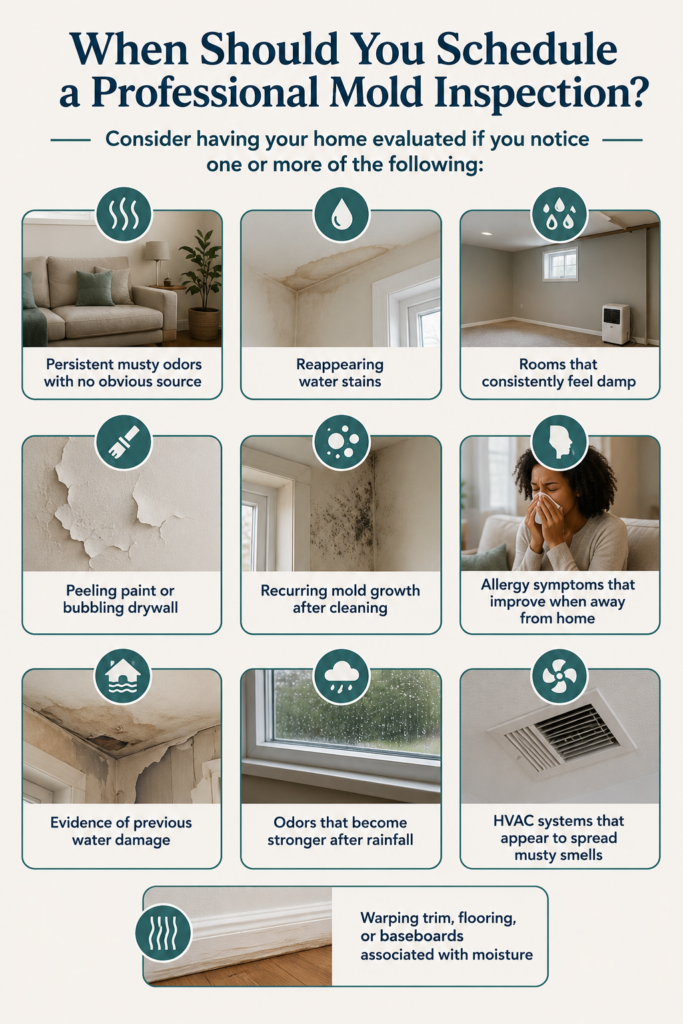
By paying attention to subtle warning signs—persistent odors, localized humidity, recurring stains, unexplained paint failure, and changes after rain—you may be able to identify problems long before visible mold appears.
The key is not to guess.
A thorough investigation looks beyond the symptoms to identify the conditions allowing mold to grow in the first place.
At Carolina OdorPros, we specialize in identifying the source of hidden moisture, evaluating indoor environmental conditions, and helping homeowners understand what is happening inside their homes. Rather than masking odors or treating only visible symptoms, our focus is on finding the underlying cause so informed decisions can be made about the next steps.
If you've noticed one or more of the warning signs discussed in this article, a professional evaluation can provide clarity, peace of mind, and a path toward a healthier indoor environment.
☎️Contact

Frequently Asked Questions About Hidden Mold Behind Walls
1. How can I tell if mold is growing behind my walls if I can't see it?
Hidden mold usually reveals itself through indirect signs rather than visible growth. Common indicators include a persistent musty odor, recurring water stains, bubbling or peeling paint, unexplained allergy symptoms, rooms that consistently feel more humid than others, or odors that become stronger after rain or when the HVAC system runs. While these signs don't automatically confirm mold, they do suggest that a professional moisture investigation may be warranted.
2. Can mold grow behind drywall without showing on the surface?
Yes. In fact, this is one of the most common scenarios professionals encounter. Mold often grows on the paper backing of drywall, inside insulation, or on wall framing where moisture is trapped. The painted surface may appear perfectly normal while significant microbial growth is occurring inside the wall cavity. By the time mold becomes visible on the surface, it has often been present for months.
3. Does a musty smell always mean there is mold?
Not always—but it should never be ignored. A musty odor often comes from Microbial Volatile Organic Compounds (mVOCs), which are gases released during microbial growth. Other conditions, such as chronic moisture, decaying organic materials, or poor ventilation, can also produce similar odors. A professional inspection helps determine whether the odor is related to hidden mold, excess moisture, or another indoor air quality issue.
4. What causes mold to grow inside walls?
Mold requires four basic conditions: moisture, an organic food source, moderate temperatures, and time. Since drywall paper, wood framing, and household dust all provide nutrients, moisture is almost always the deciding factor. Common sources include plumbing leaks, roof leaks, window flashing failures, condensation, foundation seepage, and elevated humidity that remains trapped inside wall cavities.
5. Can I simply clean the mold myself?
It depends on the extent of the problem. Small areas of surface mold caused by isolated condensation may sometimes be cleaned appropriately. However, if mold is growing behind walls or inside building materials, cleaning the visible surface rarely addresses the underlying issue. Without correcting the moisture source, mold often returns. A professional evaluation can help determine whether cleaning, remediation, or repairs are the most appropriate solution.
6. Why does the mold smell get worse after it rains?
Rain can increase moisture within compromised building materials and raise outdoor humidity, slowing the drying process inside wall cavities. Changes in barometric pressure and indoor airflow may also allow more microbial odors to move into living spaces. If your home consistently develops a stronger musty odor after rainfall, it may indicate moisture intrusion through the roof, siding, windows, foundation, or another part of the building envelope.
7. Is air testing enough to determine if I have hidden mold?
Not always. Air sampling is one tool that can provide useful information, but it is only one piece of the puzzle. Hidden mold may release relatively few spores into the living space, especially if the growth remains enclosed within a wall cavity. At Carolina OdorPros, we believe the most accurate evaluations combine building history, moisture mapping, thermal imaging, humidity measurements, airflow assessment, visual inspection, and targeted testing when appropriate. Looking at the building as a complete system often provides a much clearer understanding than relying on a single test alone.
8. Can hidden mold affect my indoor air quality?
Yes. Hidden mold can contribute to indoor air quality concerns by releasing spores, microbial volatile organic compounds (mVOCs), and microscopic biological particles into the air. While the effects vary depending on the individual and the extent of the growth, maintaining a dry, well-managed indoor environment is an important part of promoting healthier indoor air. Identifying and correcting moisture issues is often the first step toward improving overall indoor environmental quality.
9. What equipment does Carolina OdorPros use during a mold inspection?
Every home is different, so no two inspections are exactly alike. Depending on the situation, our investigations may include professional moisture meters, infrared thermal imaging cameras, hygrometers for measuring temperature and humidity, building envelope evaluations, HVAC airflow assessments, and other diagnostic tools. When appropriate, we may also recommend targeted sampling to gather additional information. Our primary objective is not simply to find mold—we work to identify why the conditions allowing mold growth developed in the first place.
10. Why should I choose Carolina OdorPros instead of a company that simply removes mold?
Because lasting solutions begin with finding the cause—not just treating the symptom.
At Carolina OdorPros, we take a building-science approach to every inspection. Rather than focusing solely on visible mold, we investigate the moisture source, airflow patterns, humidity conditions, and building envelope issues that allowed microbial growth to occur. This comprehensive approach helps homeowners make informed decisions, reduces the likelihood of recurring problems, and supports healthier indoor environments. Our goal is to provide clear answers, practical recommendations, and solutions that address the root of the problem—not just what can be seen on the surface.