

Understanding Hidden Moisture, Mold, and Odor Sources Most Homeowners Never Find
You vacuum. You mop. The laundry is done. The trash has been taken out. Every visible surface is spotless.
Yet every time you walk through the front door, there's still that unmistakable musty smell.
It's one of the most frustrating problems homeowners face because the house looks clean while the odor suggests something isn't right.
The truth is that musty odors rarely come from dirt. They come from hidden moisture, microbial growth, or building materials that have absorbed odors over months or even years.
In many cases, the smell is actually your home's early warning system telling you there's an underlying problem that hasn't been discovered yet.
At Carolina Odor Pros, we've inspected homes throughout the Charlotte area where homeowners had spent months trying candles, air fresheners, carpet shampoos, deodorizers, and deep cleaning products—only to discover the real source was hidden behind drywall, beneath flooring, inside HVAC systems, or under the home in the crawl space.
Understanding why this happens begins with understanding what "musty" actually means.
Also Read Mold Testing & Inspection
What Does a Musty Smell Actually Mean?
Many people describe musty odors differently:
- Damp smell
- Old house smell
- Wet basement smell
- Earthy odor
- Dirty sock smell
- Basement-like smell
- Moldy smell
- Stale air
While these descriptions vary, they're usually caused by the same underlying process.
The Science Behind Musty Odors
Contrary to popular belief, you're usually not smelling mold itself.
Instead, you're smelling gases called Microbial Volatile Organic Compounds (MVOCs).
These compounds are naturally released when mold, mildew, bacteria, and other microorganisms digest organic materials such as:
- Wood
- Drywall paper
- Carpet backing
- Insulation
- Dust
- Fabrics
- Furniture
- Ceiling tiles
As microorganisms grow, they produce microscopic airborne compounds that create the familiar musty odor humans recognize.
This is why even a relatively small hidden mold colony can make an entire home smell musty.
Also Read What Are The Health Risks Associated With Mold?
Original Industry Insight:
Your Nose Detects the Symptom Before You Can See the Problem
One of the biggest misconceptions in indoor air quality is believing mold has to be visible before it becomes an issue.
In reality:
Your nose often detects microbial activity weeks or months before visible mold appears.
This happens because:
- MVOCs spread through the air
- Air currents move odors throughout the home
- Mold can remain hidden inside walls
- Tiny colonies still produce noticeable odors
By the time staining becomes visible on drywall, the odor has often been present for a long time.
This is why odor investigations frequently locate problems homeowners never suspected.
Why Cleaning Doesn't Remove Musty Odors
This is where many homeowners become frustrated.
They clean harder.
The smell stays.
Why?
Because cleaning removes surface contaminants, not hidden odor sources.
Think of it this way:
Cleaning a countertop doesn't repair a leaking pipe inside the wall.
Likewise, shampooing carpet doesn't remove moisture trapped underneath the padding.
Odors continue because the source continues producing them.
💦Odor Removal Services
First-Principles Explanation: Odors Always Have a Source
One of the most important principles in professional odor removal is surprisingly simple:
Odors cannot exist without a source.
Air fresheners don't eliminate odors.
Neither do scented candles.
Neither do essential oils.
They simply overwhelm your nose temporarily.
Professional odor removal focuses on locating and eliminating the actual source.
Until that source is removed or corrected, the odor returns.
The 12 Most Common Reasons a Clean House Still Smells Musty
1. Hidden Water Damage Behind Walls
Many water leaks never become dramatic enough to soak floors or ceilings.
Instead, they slowly introduce moisture into wall cavities where homeowners can't see it.
Common sources include:
- Plumbing leaks
- Roof leaks
- Window flashing failures
- Ice dam damage
- Appliance supply lines
- Shower plumbing
- Exterior siding failures
Once moisture enters the wall cavity, mold can begin growing on:
- Drywall backing
- Studs
- Insulation
- Sheathing
- Framing lumber
Because the colony remains hidden, homeowners often smell it long before they ever discover it.
2. Crawl Space Moisture
In the Carolinas, crawl spaces are among the largest contributors to persistent musty odors.
Warm, humid outdoor air enters the crawl space where it meets cooler surfaces.
Condensation develops.
Moisture accumulates.
Organic materials remain damp.
This creates ideal conditions for:
- Mold
- Mildew
- Wood decay fungi
- Elevated humidity
Because homes naturally "breathe," air from the crawl space often rises upward through the home due to the stack effect.
That means odors generated beneath the house eventually become noticeable inside living areas.
🦠Mold Remediation Services
Original Industry Observation
Many homeowners assume odors travel downward.
In reality, the opposite often occurs.
Air typically moves upward through a home because warm indoor air rises and exits through the attic.
As that air leaves, replacement air is pulled from lower levels—including crawl spaces.
This means a crawl space odor frequently becomes a whole-house odor.
3. High Indoor Humidity
Even without active leaks, excessive humidity can produce musty odors.
Ideal indoor humidity generally falls between:
30%–50%
When humidity climbs above approximately 60%, mold growth becomes significantly easier.
High humidity allows:
- Dust to retain moisture
- Fabrics to absorb moisture
- Wood framing to remain damp
- Mold spores to colonize surfaces
Charlotte summers frequently produce indoor humidity levels capable of sustaining mold growth if homes are poorly ventilated.
4. HVAC Systems Spreading Odors
Your heating and cooling system continuously circulates air.
If microbial growth develops inside the system, every cycle distributes odor throughout the home.
Potential HVAC odor sources include:
- Dirty evaporator coils
- Wet insulation
- Condensate drain issues
- Mold inside air handlers
- Contaminated ductwork
- Standing water
Many homeowners first notice musty smells when the air conditioner starts running.
That's often a clue the HVAC system deserves closer inspection.
Myth Busting
Myth:
"If I replace my air filter, the smell will disappear."
Reality:
Air filters trap particles.
They do not remove mold growing inside ducts, drain pans, insulation, or evaporator coils.
Replacing the filter is good maintenance—but rarely solves persistent musty odors by itself.
5. Wet Carpet Padding
Carpet may appear perfectly clean while the padding underneath remains damp.
Common causes include:
- Pet accidents
- Minor plumbing leaks
- Flooding
- Window leaks
- High humidity
- Appliance overflows
Because padding is thick and porous, moisture can remain trapped for weeks.
Microbial growth often develops beneath the carpet where homeowners never see it.
6. Attic Moisture Problems
Attics experience major temperature swings throughout the year.
Poor ventilation can create condensation on roof decking.
Combined with:
- Bathroom exhaust leaks
- Roof leaks
- Blocked soffit vents
- Inadequate insulation
the attic becomes another common location for hidden mold growth.
Odors generated there can migrate downward into living spaces through ceiling penetrations and HVAC systems
7. Furniture and Upholstery Can Hold Musty Odors for Years
Many homeowners assume the smell is "in the house" when it's actually trapped inside porous furnishings.
Common odor reservoirs include:
- Fabric sofas
- Mattresses
- Recliners
- Area rugs
- Curtains
- Decorative pillows
- Pet beds
These materials readily absorb moisture from the surrounding air. If a home previously experienced elevated humidity or water damage, the furniture itself may continue releasing odors long after the original moisture issue has been corrected.
First-Principles Explanation: Why Porous Materials Keep Smelling
Think of porous materials as microscopic sponges.
Instead of only absorbing water, they also absorb:
- MVOCs (Microbial Volatile Organic Compounds)
- Smoke particles
- Cooking oils
- Pet odors
- Organic compounds released during mold growth
Even after the material dries, many of these compounds remain trapped inside thousands of tiny pores.
Simply spraying deodorizer on the surface rarely reaches the compounds embedded deep within the material.
This is why professional odor remediation often involves specialized cleaning methods or, in severe cases, replacing heavily contaminated porous materials.
8. Damp Insulation Hidden Inside Walls
Insulation is designed to slow heat transfer—not to resist prolonged moisture.
Once insulation becomes wet, it can:
- Stay damp for weeks or months
- Lose much of its insulating value
- Support mold growth on surrounding materials
- Trap persistent odors
Fiberglass itself doesn't mold, but the dust and organic debris it collects can provide food for microbial growth.
Cellulose insulation is even more vulnerable because it contains recycled paper fibers.
A small roof leak or plumbing leak may affect insulation long before homeowners notice any visible damage.
9. Basements and Foundation Moisture
Basements naturally experience higher humidity because they're surrounded by soil.
Water can enter through:
- Foundation cracks
- Hydrostatic pressure
- Poor grading
- Clogged gutters
- Failed waterproofing
- Window wells
Even if standing water is never visible, elevated moisture alone can create ideal conditions for mold and mildew.
Musty basement odors frequently migrate upstairs through the home's natural airflow.
10. Closets, Storage Rooms, and Low-Airflow Areas
Some of the strongest musty odors originate in places homeowners rarely inspect.
Examples include:
- Hall closets
- Linen closets
- Utility rooms
- Under staircases
- Storage rooms
- Guest bedrooms
- Seasonal storage areas
These locations often experience:
- Poor air circulation
- Elevated humidity
- Minimal sunlight
- Long periods with closed doors
The result is an environment where moisture lingers longer than elsewhere in the home.
11. Previous Water Damage That Was Never Fully Dried
One of the most common discoveries during professional odor investigations is evidence of an old water loss.
Perhaps:
- A washing machine overflowed years ago.
- A refrigerator leaked.
- A roof leaked before being repaired.
- A pipe burst and was "cleaned up."
The visible water disappeared.
The underlying moisture didn't.
If structural materials weren't dried quickly and thoroughly, microbial growth may have continued behind finished surfaces.
Many homeowners unknowingly inherit these problems after purchasing a home.
12. The Odor Isn't Mold at All
Not every musty smell comes from mold.
Several other odor sources can mimic a moldy smell.
These include:
- Sewer gas
- Dead animals
- Wet insulation
- Bacterial growth
- Decaying wood
- Wet cardboard
- HVAC condensate issues
- Biofilm inside drain lines
This is why professional odor investigations focus on identifying the source rather than making assumptions based solely on smell.
How to Tell If the Musty Smell Is Mold
Although smell alone can't confirm mold, certain clues make mold more likely.
Signs That Point Toward Hidden Mold
- Odor worsens after rain
- Smell increases when the HVAC runs
- Persistent high indoor humidity
- Previous water damage
- Staining on ceilings or walls
- Condensation on windows
- Peeling paint
- Warped flooring
- Allergy symptoms that improve when leaving home
When several of these occur together, a professional moisture inspection is often the next logical step.
Also ReadMold Testing & Inspection
Original Industry Insight:
Mold Doesn't Need Much Water
Many homeowners picture mold growing only after catastrophic flooding.
In reality, mold simply needs three things:
- Moisture
- Organic material
- Time
Even small amounts of moisture from:
- Humid air
- Condensation
- Minor plumbing leaks
- Slow roof leaks
can support microbial growth if they persist long enough.
The absence of visible water does not mean moisture isn't present.
A Step-by-Step Homeowner Inspection Checklist
Before assuming the worst, homeowners can perform a systematic inspection.
Step 1: Measure Indoor Humidity
Use a digital hygrometer.
Aim for:
30–50% relative humidity
If readings consistently exceed 60%, moisture control should become a priority.
Step 2: Inspect Around Plumbing
Look beneath:
- Kitchen sinks
- Bathroom sinks
- Toilets
- Washing machines
- Water heaters
- Refrigerators
- Dishwashers
Search for:
- Water stains
- Soft wood
- Rust
- Dampness
- Musty smells
Step 3: Check the HVAC System
Inspect:
- Air filter
- Condensate drain
- Air handler
- Supply vents
- Return vents
If the odor becomes stronger immediately after the system starts, the HVAC system deserves closer evaluation.
Step 4: Examine the Crawl Space or Basement
Look for:
- Standing water
- Wet insulation
- Condensation
- Mold growth
- High humidity
- Fallen vapor barriers
If you're uncomfortable entering these areas, leave the inspection to a qualified professional.
Step 5: Inspect the Attic
Check for:
- Roof leaks
- Dark staining
- Wet insulation
- Frost or condensation
- Bathroom exhaust fans venting into the attic
When DIY Solutions Work
Not every musty odor requires professional remediation.
DIY solutions may help when:
- Humidity is slightly elevated.
- The odor source is obvious.
- No structural materials are affected.
- Moisture problems are corrected immediately.
- Mold growth is very limited.
Improving ventilation, repairing minor leaks, and controlling humidity can often prevent larger problems.
When DIY Isn't Enough
Professional evaluation is usually warranted when:
- The odor persists for weeks or months.
- Cleaning doesn't help.
- Multiple rooms smell musty.
- Occupants experience respiratory irritation.
- There has been previous flooding.
- Moisture keeps returning.
- Visible mold continues spreading.
- The source cannot be located.
Persistent odors almost always indicate that the underlying source remains active.
How Professionals Track Down Hidden Odors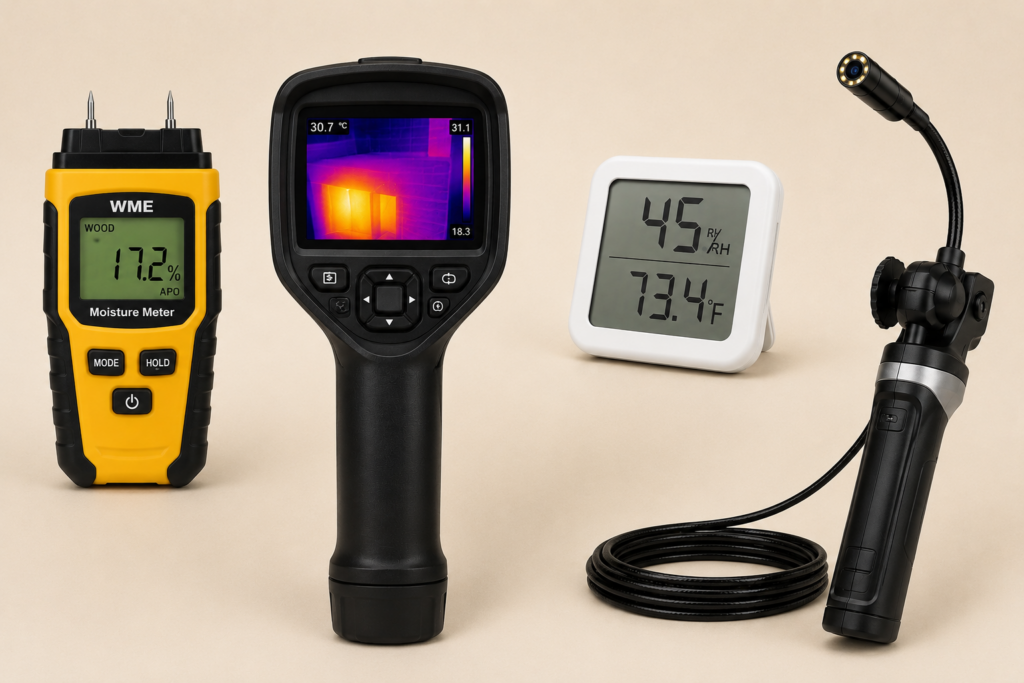
Professional odor investigations involve much more than looking for visible mold.
Depending on the situation, specialists may use:
Moisture Meters
To detect elevated moisture inside building materials.
Thermal Imaging Cameras
To identify temperature differences that may indicate hidden moisture.
Hygrometers
To evaluate indoor humidity conditions.
Borescopes
Small inspection cameras inserted into wall cavities with minimal disruption.
Airflow Evaluation
Professionals study how air moves throughout the home to determine why odors appear stronger in certain rooms.
Odor Mapping
Experienced investigators often identify patterns based on:
- Time of day
- Weather
- HVAC operation
- Seasonal humidity
- Occupancy
Understanding these patterns helps narrow the search for hidden moisture.
Myth Busting
Myth:
"If I can't see mold, there isn't any."
Reality:
Many mold problems remain hidden inside:
- Wall cavities
- Crawl spaces
- Attics
- HVAC systems
- Beneath flooring
- Behind cabinets
Visible mold often represents only a small portion of the affected area.
Also Read: https://carolinaodorpros.com/10-signs-hidden-…rolina-odor-pros/
Myth:
"Air fresheners solve musty odors."
Reality:
Air fresheners temporarily mask odors.
They do not:
- Remove moisture
- Eliminate microbial growth
- Repair leaks
- Clean contaminated materials
The odor almost always returns because the source remains.
Read Also Mold Remediation Services
Charlotte's Climate Makes Moisture Control Especially Important
Homes throughout the Charlotte, Carolina region face unique environmental challenges.
Warm temperatures combined with high summer humidity create conditions that encourage moisture accumulation in:
- Crawl spaces
- Attics
- HVAC systems
- Basements
- Wall cavities
Seasonal thunderstorms, tropical weather systems, and prolonged periods of elevated humidity can all contribute to moisture intrusion.
For this reason, moisture prevention is often just as important as moisture remediation.
📍Cornelius, NC 📍Concord, NC 📍Belmont, NC
Preventing Musty Odors Before They Start
Simple maintenance can significantly reduce the risk of persistent odors.
Consider these habits:
- Keep indoor humidity between 30–50%.
- Repair plumbing leaks promptly.
- Clean HVAC drain lines.
- Replace HVAC filters regularly.
- Ensure bathroom fans vent outdoors.
- Inspect roofs annually.
- Maintain gutters and downspouts.
- Grade landscaping away from the foundation.
- Inspect crawl spaces periodically.
- Address water damage immediately—ideally within 24–48 hours.
The sooner moisture is controlled, the less likely it is to develop into a long-term odor problem.
What You Should Do Next. . .
Your home should be the one place where you can breathe comfortably and feel confident that your indoor environment is clean, healthy, and safe. If you've cleaned every room, emptied the trash, shampooed the carpets, and the musty smell still lingers, your home is telling you something important: there's likely an underlying issue that cleaning alone can't fix.
In our experience, persistent musty odors are rarely random. They almost always have a source—whether it's hidden moisture inside a wall, a damp crawl space, an HVAC issue, previous water damage, or microbial growth that's developing out of sight. The earlier that source is identified, the easier and less expensive it often is to correct. Waiting for visible mold, structural damage, or worsening indoor air quality can turn a manageable problem into a major restoration project.
At Carolina Odor Pros, we don't believe in masking odors—we believe in solving them. Our specialists use professional moisture detection equipment, building science expertise, and years of real-world experience to locate the true source of persistent odors, explain exactly what we're finding, and recommend practical, honest solutions. No guesswork. No unnecessary services. Just a thorough investigation focused on protecting your home and your family's indoor environment.
If your house still smells musty no matter how much you clean, don't spend another season wondering where it's coming from. Let us help you get the answers you've been looking for.
Schedule your professional odor and moisture inspection with Carolina Odor Pros today. We'll identify what's causing the smell, explain your options in clear, straightforward language, and help you restore the fresh, clean home you thought you already had—because every homeowner deserves the peace of mind that comes from knowing the problem has truly been solved.
☎️Service Area & Contact Page

Frequently Asked Questions
1. Why does my house smell musty even though I clean regularly?
Cleaning removes surface dirt, but musty odors usually originate from hidden moisture, mold, mildew, or damp building materials rather than everyday dust or debris.
2. Is a musty smell always caused by mold?
No. Sewer gas, wet insulation, bacteria, decaying organic material, and HVAC issues can also create odors similar to mold.
3. Can high humidity alone make my home smell musty?
Yes. Elevated humidity can encourage microbial growth and allow porous materials to absorb moisture, creating persistent odors even without visible water damage.
4. Why does the smell get worse after it rains?
Rain often increases moisture levels in crawl spaces, basements, wall cavities, and foundations, which can intensify microbial activity and odor production.
5. Can my HVAC system spread musty odors?
Yes. Mold or bacteria growing on evaporator coils, drain pans, insulation, or inside ductwork can distribute odors throughout the home.
6. Should I get mold testing if my house smells musty?
Not always. Identifying and correcting the moisture source is often more valuable than testing alone. A professional inspection can help determine the most appropriate next step.
7. Will an air purifier remove musty odors?
Some air purifiers may reduce airborne particles or certain odors, but they cannot eliminate the underlying source of moisture or microbial growth.
8. Can carpet padding cause a musty smell?
Yes. Carpet padding can retain moisture long after the surface appears dry, creating ideal conditions for microbial growth beneath the carpet.
9. Is a musty smell harmful?
A musty odor itself is a sign that something should be investigated. While the smell alone doesn't determine health risk, persistent moisture and microbial growth should be addressed to protect your home and indoor air quality.
10. When should I call a professional?
If the odor persists despite cleaning, returns repeatedly, follows water damage, or you can't locate the source, a professional moisture and odor investigation is recommended.