

You clean the floors, empty the trash, wash the fabrics, and replace the HVAC filter. The house smells fresh—until the air conditioner turns on.
Then the odor returns.
It may smell musty, sour, smoky, damp, chemical-like, or even like dirty socks. Sometimes it comes from one vent. In other homes, the odor spreads through multiple rooms at once.
The timing provides an important clue. When an odor becomes stronger while the air conditioner is operating, the HVAC system may be circulating air from a contaminated area, moving odors from a damp component, or creating pressure differences that pull unwanted air from a crawl space, attic, garage, plumbing opening, or wall cavity.
In other words, the air conditioner may not be creating the odor. It may be revealing and distributing an odor that already exists.
For homeowners around Charlotte, North Carolina, warm weather, high humidity, frequent air-conditioning use, and moisture-prone crawl spaces can make these problems especially noticeable.
Why Does the Air Conditioner Make My House Smell Worse?
A central air-conditioning system continuously moves air through the home. Return vents pull indoor air toward the air handler. The system cools and dehumidifies that air before supply ducts deliver it back into the rooms.
If air passes over a contaminated evaporator coil, stagnant drain pan, damp filter, wet duct insulation, or another odor source, the blower can carry that smell through the house.
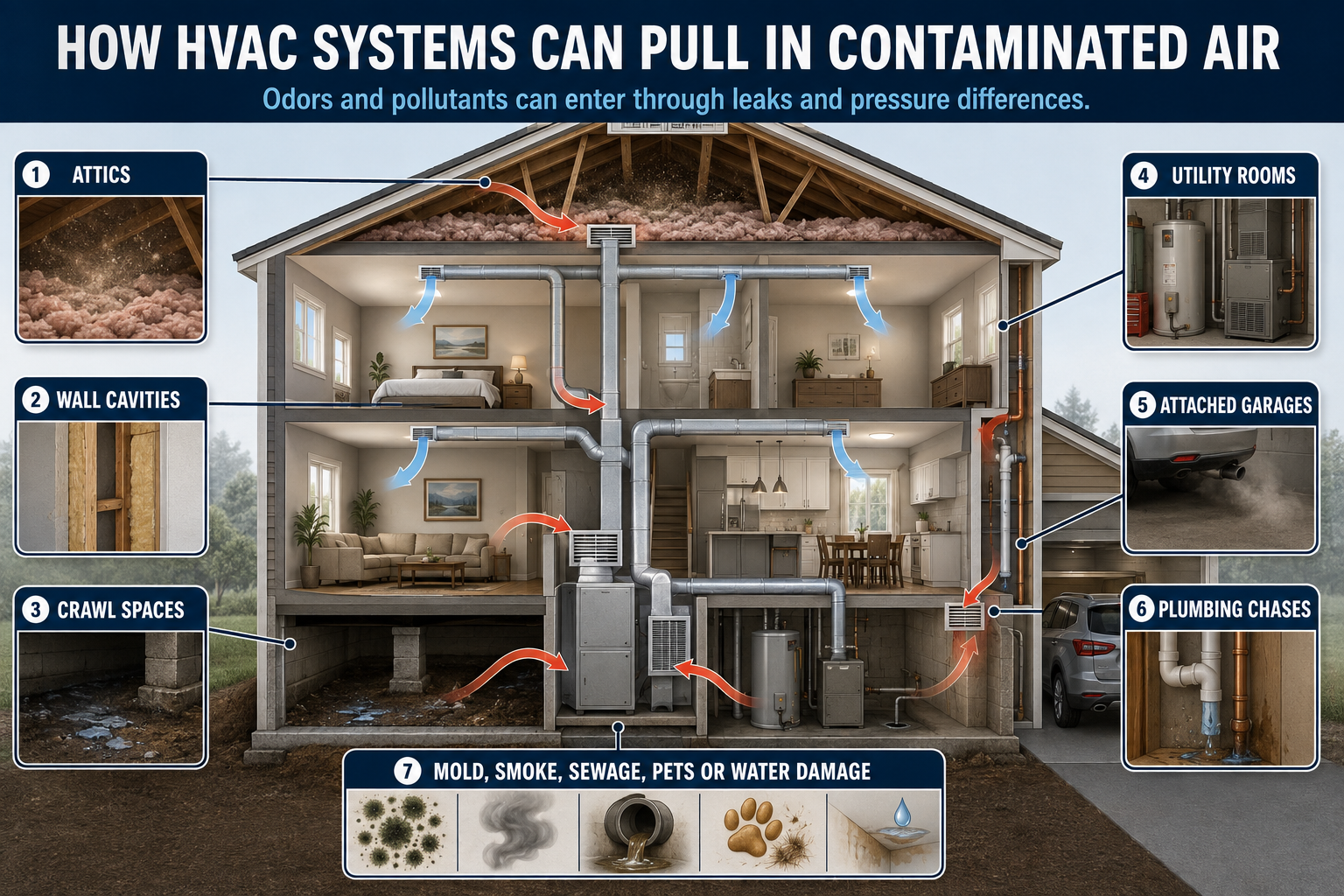
The system may also draw contaminated air from areas outside the conditioned living space, including:
- Crawl spaces
- Attics
- Wall cavities
- Utility rooms
- Attached garages
- Plumbing chases
- Areas affected by mold, smoke, sewage, pets, or water damage
The character, timing, duration, and location of the odor can help narrow the investigation.
How Can an HVAC System Spread Hidden Odors?
An air conditioner can make a hidden odor more noticeable in several ways.
Return ducts can pull air from contaminated areas. The return side of an HVAC system operates under negative pressure. If a return duct is loose, damaged, or poorly sealed, it may collect air from a crawl space, attic, garage, mechanical room, or wall cavity.
Once that air enters the return system, the HVAC equipment can distribute it throughout the house. This is why an odor originating beneath the floor may seem to come from every supply vent.
Air can pass over contaminated HVAC components. Dust, pollen, pet dander, cooking particles, smoke residue, skin cells, and other organic debris can accumulate on filters, coils, drain pans, blower components, and duct surfaces.
When those materials become damp, they can support microbial activity or begin producing unpleasant odors.
The EPA warns that HVAC condensate pans can become reservoirs for mold and bacteria when they do not drain or receive proper maintenance. Contamination can then affect nearby equipment and ventilation components. EPA mold-prevention guidance
HVAC operation can change air pressure inside the home. Leaky ducts, blocked returns, closed interior doors, and system imbalances can create pressure differences between rooms and adjoining spaces.
These pressure changes may pull air through small openings around pipes, wiring, baseboards, access panels, recessed fixtures, and floor penetrations. If the replacement air comes from a musty crawl space, contaminated wall cavity, attached garage, or plumbing area, the odor may appear whenever the blower starts.
What Do Different Air-Conditioner Odors Mean?
An odor cannot provide a definitive diagnosis by itself, but it can point the investigation in the right direction.
| Type of odor | Possible sources |
|---|---|
| Musty, earthy, or damp | Mold or microbial growth, wet insulation, crawl-space moisture, damp ductwork |
| Dirty socks or sour laundry | Microbial residue around the evaporator coil or condensate pan |
| Wet dog | Damp filter, contaminated coil, pet residue, or humid crawl-space air |
| Urine or ammonia | Pet contamination, rodents, animal waste, or nesting material |
| Cigarette or stale smoke | Smoke residue in the HVAC system, walls, ceilings, carpet, or insulation |
| Rotten eggs or sulfur | Possible gas leak, sewer gas, stagnant water, or decomposing material |
| Sewage | Dry plumbing trap, damaged drain or vent line, or crawl-space contamination |
| Burning plastic or electrical | Overheated motor, wiring, capacitor, control board, or another electrical component |
| Chemical or solvent-like | Paint, adhesives, cleaners, stored chemicals, overheated materials, or outdoor fumes |
| Decaying or dead-animal odor | Animal remains in ductwork, an attic, crawl space, or wall cavity |
Different sources can create similar smells. A reliable diagnosis should be based on inspection, moisture conditions, airflow patterns, and physical evidence—not odor alone.
Can a Dirty Evaporator Coil Make the House Smell?
The evaporator coil is one of the first areas to investigate when an odor appears during cooling.
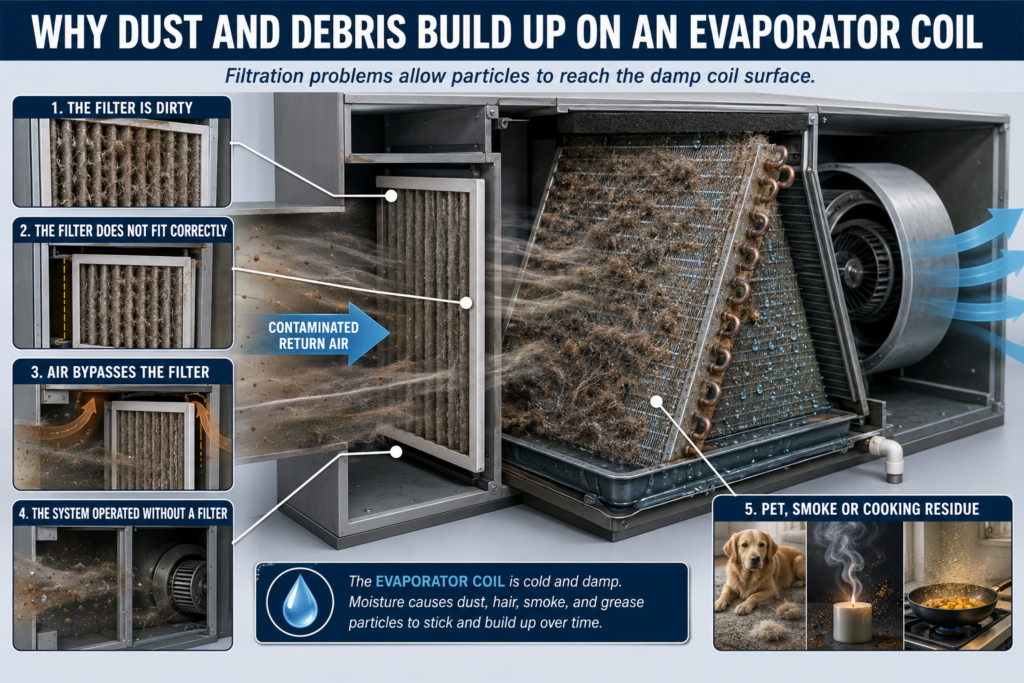
The coil becomes cold while the air conditioner operates. When warm household air moves across it, water vapor condenses on the coil’s surface. That water should drip into the condensate pan and leave through a drain line.
Dust and organic debris can accumulate on the coil, particularly when:
- The filter is dirty
- The filter does not fit correctly
- Air bypasses the filter
- The system has operated without a filter
- The home contains significant pet, smoke, or cooking residue
A damp, dirty coil may develop a musty, sour, or dirty-sock odor. The smell may be strongest during the first few minutes after the system starts.
Cleaning the supply registers will not correct contamination located on the evaporator coil.
Can the Condensate Drain Cause Musty HVAC Odors?
An air conditioner can remove a significant amount of water from household air during Charlotte’s humid cooling season. That water must drain away correctly.
Odors and water damage may develop when:
- The condensate line becomes obstructed
- Slime or debris accumulates in the drain
- The drain pan holds standing water
- The pan is cracked, corroded, or improperly sloped
- Condensate leaks into insulation, flooring, drywall, or cabinetry
- The drain is incorrectly connected to the plumbing system
Standing water can support microbial activity. A slow condensate leak may also wet surrounding materials without creating an obvious puddle.
When the blower starts, odors from stagnant water, contaminated residue, or hidden moisture damage may enter the moving air.
Can Mold Grow Inside an HVAC System?
Mold requires moisture, a suitable temperature, and an available food source.
Clean sheet metal provides little food by itself, but HVAC systems collect dust and other organic particles. Moisture can come from condensation, clogged drains, wet filters, air leaks, high indoor humidity, or water-damaged insulation.
Potential locations for microbial growth include:
- Evaporator coils
- Condensate pans
- Blower compartments
- Filter housings
- Fiberglass duct liners
- Flexible duct materials
- Wet duct insulation
- HVAC closets
- Building materials near the air handler
However, a musty smell from the vents does not automatically prove that mold is growing inside the ductwork. The HVAC system may simply be drawing air from mold growth in a crawl space, attic, wall cavity, or nearby room.
The CDC explains that mold can grow on insulation, drywall, wood, carpet, fabric, dust, and many other materials when moisture is available. Correcting the problem requires addressing both the growth and its moisture source. CDC mold guidance
Can a Dirty HVAC Filter Cause a Bad Smell?
An overdue filter may hold much more than ordinary household dust. Depending on the home, it can collect:
- Pet hair and dander
- Pollen
- Cooking particles
- Tobacco or cannabis residue
- Mold spores
- Insect debris
- Fine organic material
If the filter becomes damp, it may develop a noticeable odor. A heavily clogged filter can also restrict airflow and contribute to cooling and moisture-control problems.
Replacing the filter is an appropriate first step, but a new filter will not correct contamination that has already reached the evaporator coil, blower, drain pan, cabinet, or duct system.
A filter that repeatedly becomes wet indicates an underlying moisture problem that deserves further investigation.
Can Moisture-Damaged Ductwork Smell Musty?
Ductwork can develop or transport odors when it becomes wet, damaged, or contaminated.
Common causes include:
- Condensation on poorly insulated ducts
- Roof or plumbing leaks wetting duct insulation
- Flexible ducts contacting damp soil
- Return ducts pulling air from a crawl space
- Rodents or insects entering the duct system
- Smoke residue settling inside the system
- Pet contamination reaching floor registers
- Fiberglass duct liner remaining wet
Porous duct materials require special attention. Flexible ductwork and internally lined ducts may retain moisture and contamination beneath the visible surface.
When porous duct material becomes severely contaminated or water-damaged, deodorizing the surface may not provide a lasting result. Replacement can sometimes be more reliable than repeated cleaning.
Can a Crawl Space Make the Air-Conditioner Vents Smell?
Crawl spaces are frequent sources of musty odors in homes throughout the Charlotte area.
A crawl space may contain:
- Exposed damp soil
- Elevated humidity
- Plumbing leaks
- Wet insulation
- Mold or microbial growth
- Wood decay
- Rodent waste
- Standing water
- Sewage contamination
- Improper exterior drainage
Air from the crawl space can enter the house through leaky return ducts, plumbing penetrations, floor openings, gaps around registers, or pressure differences created by the HVAC system.
Signs that a crawl space may be involved include:
- The odor worsens after rain
- Floor-level vents smell the strongest
- The first floor smells worse than upper levels
- The crawl-space entrance has a similar odor
- The smell becomes stronger during humid weather
- The odor appears as soon as the HVAC fan starts
Treating only the indoor air will not correct a continuing moisture or contamination problem beneath the home.
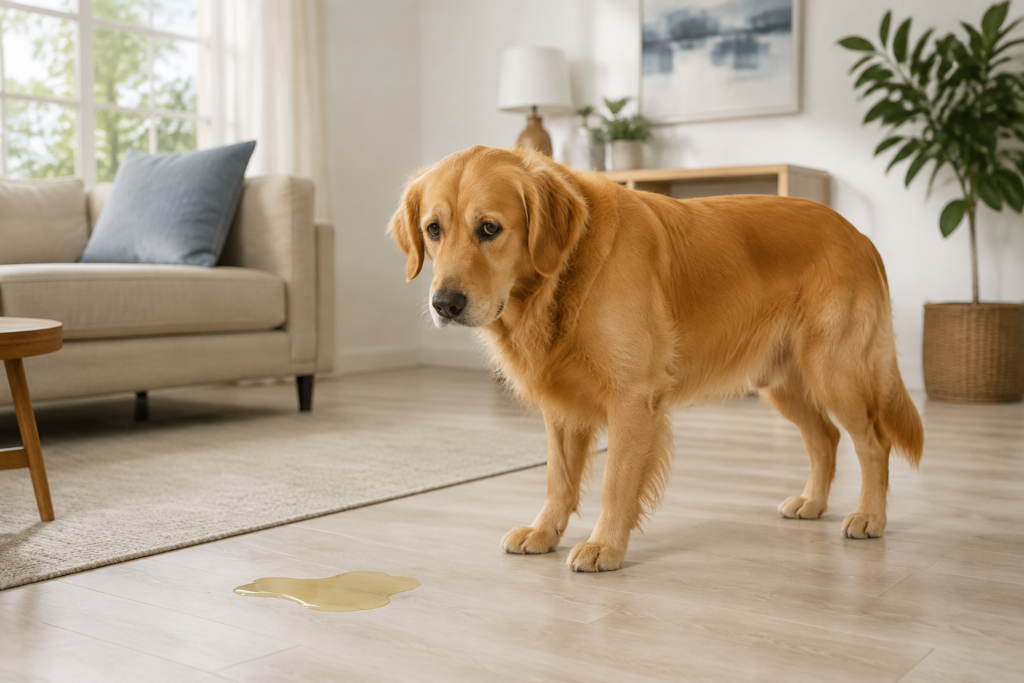
Why Does Pet Urine Smell Worse When the AC Runs?
Pet urine can penetrate far below the visible surface of a carpet. It may soak into:
- Carpet padding
- Subflooring
- Baseboards
- Drywall
- Wood flooring
- Concrete
- Floor registers
Humidity can increase the release of odor-producing compounds from contaminated materials. The HVAC system may then carry those odors beyond the original room.
This is why a house may smell acceptable while the system is off but develop a noticeable urine or ammonia smell once air starts circulating.
Cleaning the carpet fibers may not be enough if urine has reached the padding or subfloor.
Rodents and other animals can create similar odors when urine, droppings, nesting materials, or remains are present in ducts, attics, crawl spaces, or wall cavities.
Why Does Smoke Odor Return When the AC Comes On?
Cigarette, cannabis, fireplace, and cooking smoke leave microscopic residues throughout a home.
Those residues can settle on:
- Walls and ceilings
- HVAC coils
- Blower components
- Duct interiors
- Insulation
- Carpet and padding
- Furniture
- Cabinets and trim
Airflow can release and redistribute odor compounds from these surfaces. Humid conditions may also make old smoke odors more noticeable.
Painting the walls or spraying deodorizer into the vents rarely addresses every affected material. A lasting solution requires determining how far the residue traveled and which surfaces can be cleaned, treated, sealed, or replaced.
Why Do My Air-Conditioner Vents Smell Like Sewage?
A sewage odor near an HVAC vent does not necessarily mean sewage is inside the duct.
The system may be pulling air from a nearby plumbing cavity, crawl space, or room containing a dry drain trap.
Potential sources include:
- An unused sink, shower, bathtub, or floor drain
- A failed toilet seal
- A damaged plumbing vent
- A cracked drainpipe
- Sewage contamination beneath the home
- An improperly configured condensate drain
- Negative pressure drawing gas through a vulnerable drain
Homeowners can run water into rarely used drains to refill their traps. If the odor continues, the plumbing system, crawl space, and HVAC airflow pathways may require professional evaluation.
Visible sewage and contaminated water should not be handled as routine household cleaning problems.
Why Does My Air Conditioner Smell Like It Is Burning?
A burning, hot-plastic, fishy, or electrical odor requires prompt attention.
Possible causes include:
- Overheated wiring
- A failing blower motor
- A damaged capacitor
- An overheating control board
- Melting wire insulation
- A seized mechanical component
- Foreign material touching an electrical component
Turn the system off and arrange for qualified HVAC or electrical service.
If you see flames, smoke, or sparks, leave the home and contact emergency services.
Could a Rotten-Egg Smell Indicate a Gas Leak?
A rotten-egg or sulfur-like odor should never be dismissed as an ordinary HVAC smell.
Utility providers add a distinctive odorant to natural gas to make leaks easier to detect. If you suspect a gas leak:
- Do not operate switches or electrical equipment
- Do not light a flame
- Leave the building
- Move to a safe location
- Contact the gas utility or emergency services
Sewer gas, stagnant water, and decomposing organic materials may produce similar odors, but a potential gas leak must be ruled out first.
Why Are AC Odors Worse in Charlotte’s Humid Climate?
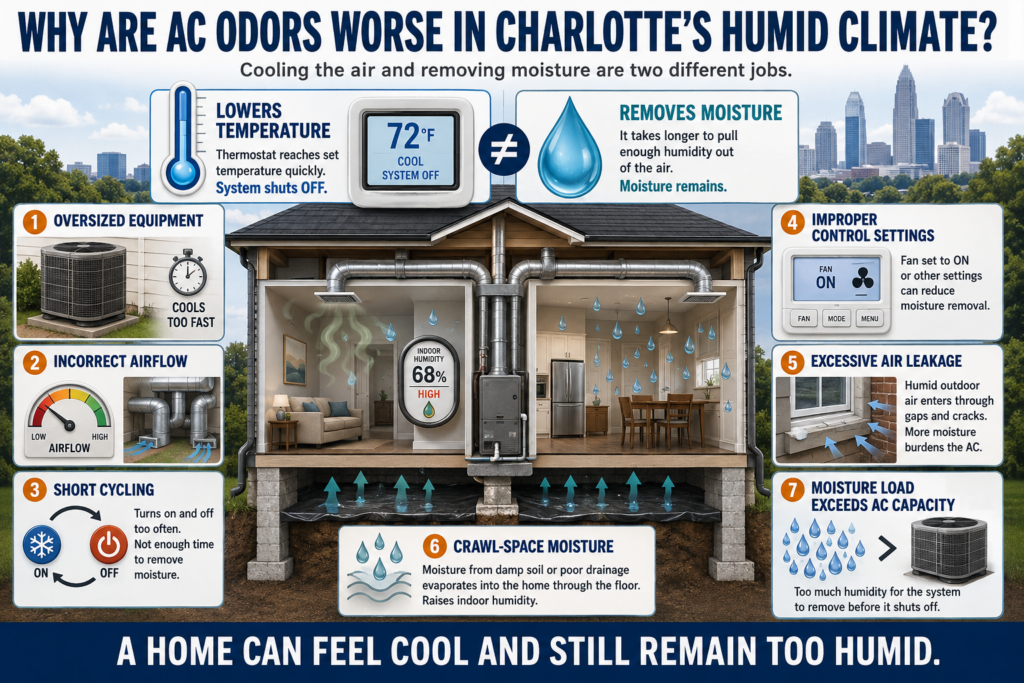
Air conditioners perform two related but separate jobs: reducing temperature and removing moisture.
A system can cool a house quickly without operating long enough to remove enough humidity. This may occur when:
- The equipment is oversized
- Airflow is incorrectly configured
- The system short-cycles
- Controls are improperly set
- The home has excessive air leakage
- Crawl-space moisture enters the living space
- The moisture load exceeds the system’s dehumidification capacity
The Department of Energy notes that modern air-conditioning equipment may cool a home effectively while still struggling with humidity control. The result can be a house that feels cool but clammy. Department of Energy humidity-control research
Persistent humidity may keep coils, drain pans, duct insulation, crawl spaces, and building materials damp. It can also make pet, smoke, microbial, and organic odors more noticeable.
The CDC recommends maintaining indoor relative humidity at no more than 50% when possible. EPA guidance generally recommends keeping it below 60%, ideally between 30% and 50%.
What Can the Timing of the Odor Reveal?
The exact moment an odor begins can provide valuable diagnostic information.
The odor is strongest during the first few minutes. This may indicate residue on the evaporator coil, stagnant condensate, a damp filter, contamination in the air handler, or odors accumulating in the ducts while the system is off.
The odor becomes worse the longer the system runs. The system may be continuously drawing air from a crawl space, attic, wall cavity, garage, or contaminated room.
Only one vent smells. A localized duct problem, pest issue, wet insulation, nearby contamination, or an odor source inside that room may be responsible.
Every vent smells. The source may be near a shared component, such as the evaporator coil, blower, filter compartment, air handler, or main return.
The odor worsens after rain. Investigate crawl-space water, foundation seepage, roof leaks, wet insulation, drainage problems, and duct condensation.
The smell appears during fan-only operation. This pattern suggests that airflow is distributing the odor even without active cooling.
What Can Homeowners Safely Check?
Homeowners can collect useful information without dismantling the HVAC equipment.
Inspect the filter. Check whether it is dirty, damp, collapsed, installed backward, incorrectly sized, or allowing air to pass around its edges.
Record the odor pattern. Note what the odor resembles, where it appears first, which vent smells strongest, how quickly it begins, how long it lasts, and whether rain or humidity makes it worse.
Check the indoor humidity. A digital hygrometer can help identify consistently humid conditions, although one reading does not reveal the moisture source.
Look for visible moisture. Inspect accessible areas around the air handler and condensate drain for standing water, rust, staining, damp insulation, swollen baseboards, peeling paint, discolored drywall, or repeatedly wet flooring.
Compare the odor to adjacent areas. Without entering an unsafe location, determine whether the crawl-space or attic entrance has an odor similar to the air coming from the vents.
Never reach inside energized equipment or enter an area containing sewage, standing water, exposed electrical hazards, animals, extensive mold, or questionable structural conditions.
What Should You Avoid Doing?
Do not spray air freshener into the vents. Fragrance may temporarily cover the smell, but it does not remove contamination or correct moisture.
Do not assume duct cleaning will fix every odor. Duct cleaning cannot repair a clogged drain, leaking condensate pan, damp crawl space, urine-soaked subfloor, plumbing problem, or smoke-contaminated wall.
Do not assume every musty smell is dangerous “black mold.” A musty odor deserves investigation, but smell alone cannot identify a mold species or determine the extent of contamination.
Do not use bleach as a substitute for moisture control. Bleach cannot repair leaks, reduce humidity, dry insulation, or restore severely contaminated porous materials.
Do not paint over an unidentified odor source. Paint may temporarily hide a smell while leaving the moisture or contamination beneath it.
When Should You Call a Professional?
Professional investigation may be appropriate when:
- The odor returns after replacing the filter
- Multiple vents distribute the smell
- The air handler or nearby materials are wet
- You suspect hidden mold or water damage
- The crawl space smells strongly musty
- Sewage or animal contamination may be present
- Pet urine has entered porous building materials
- Smoke odors remain after routine cleaning
- Household members experience symptoms when the HVAC system runs
- The source cannot be located
- The odor is affecting a property sale or rental turnover
People with asthma, mold allergies, weakened immune systems, or chronic lung conditions may be more sensitive to damp or moldy environments. Health symptoms should be discussed with a qualified healthcare professional.
How Do Professionals Find the Source of an HVAC-Related Odor?
A thorough investigation examines more than the nearest air vent.
The process may include:
- Documenting when the odor begins and what conditions make it worse
- Inspecting accessible moisture-prone HVAC components
- Measuring humidity and moisture in surrounding materials
- Looking for condensate drainage problems
- Evaluating return leaks and pressure-related airflow pathways
- Inspecting the crawl space, attic, wall cavities, flooring, and plumbing areas
- Identifying which materials are producing the odor
- Separating the original source from the HVAC pathway distributing it
- Developing a source-specific correction plan
Depending on the findings, the solution may involve HVAC repair, condensate drainage correction, humidity control, duct sealing, mold remediation, removal of water-damaged materials, pet-odor treatment, smoke-residue removal, crawl-space correction, plumbing work, or pest control.
Can You Remove the Odor Without Correcting Its Source?
A lasting result requires correcting the material, moisture condition, or contamination producing the odor.
For example:
- A contaminated coil may continue smelling until it is properly cleaned and its drainage conditions are corrected.
- A damp crawl space may keep affecting the house until water entry and humidity are controlled.
- Urine-soaked subflooring may continue releasing odor after the carpet is cleaned.
- Smoke residue inside porous materials may remain after repainting.
- Wet duct insulation may require replacement instead of surface deodorizing.
- A leaking return duct may continue pulling contaminated air until it is sealed.
Deodorizing the air without correcting the source is like silencing an alarm without addressing what caused it.
What Should You Do When Your House Smells Worse With the AC On?
It is frustrating to clean your home repeatedly only to have the smell return as soon as the air conditioner starts. The odor does not necessarily mean the entire HVAC system is contaminated, but it does indicate that moisture, airflow, or a hidden source deserves closer attention.
A condensate leak, damp crawl space, contaminated building material, or microbial problem may become more extensive if it remains undiscovered. At the same time, there is no reason to assume the most alarming or expensive explanation before the source has been properly identified.
Carolina Odor Pros helps homeowners and property managers throughout the Charlotte region investigate mold, moisture, and persistent odor problems. The objective is to determine what is producing the smell, how the air-conditioning system is carrying it, and what work is genuinely necessary—without guesswork or unnecessary services.
If your house smells worse whenever the air conditioner turns on, schedule a professional odor and moisture assessment with Carolina Odor Pros. Finding and correcting the source can help restore cleaner air, greater comfort, and confidence in your home.