

How to Remove Smoke Odor After a Small Kitchen Fire
⏱️Estimated Read Time: 11 Minutes
The flames are out, the kitchen looks clean, but that unmistakable burnt smell keeps returning. Here's why smoke odors linger after a small kitchen fire—and what actually helps remove them.
The pan caught fire. You reacted quickly, extinguished the flames, and breathed a sigh of relief. Thankfully, the kitchen escaped with little visible damage.
But several days later, something isn't right.
Every time you walk into the kitchen, you notice that unmistakable burnt smell. You've opened the windows, cleaned the countertops, and washed the curtains. Yet the odor remains. Sometimes you even notice it in rooms nowhere near the stove.
How can such a small fire leave such a persistent smell?
The answer has less to do with the size of the flames and more to do with what happened to the smoke.
Executive Brief: Why Smoke Odors Remain After a Kitchen Fire
A small kitchen fire can leave behind smoke particles and odor-producing compounds that settle on cabinets, walls, ceilings, fabrics, and furnishings. Even when visible damage is minimal, these residues can continue contributing to unpleasant odors long after the smoke clears.
Effective kitchen fire smoke odor removal requires addressing the source of contamination, not simply masking the smell. Ventilation, appropriate surface cleaning, and laundering affected fabrics may resolve minor incidents. Persistent odors, however, can indicate contamination in porous materials or difficult-to-reach areas that requires professional attention.
For homeowners in Charlotte, NC, and surrounding communities, Carolina OdorPros provides professional smoke odor removal services when routine cleaning has not adequately resolved the problem.
Key Takeaways
- Small fires can leave widespread residue. Smoke travels through air currents and can reach surfaces beyond the kitchen.
- Clean air doesn't always mean clean surfaces. Air filtration may reduce airborne particles but cannot remove deposited smoke residue.
- Materials respond differently to contamination. Cabinets and countertops may be easier to clean than upholstery and other porous materials.
- Persistent odors deserve investigation. When appropriate cleaning fails, identifying remaining contamination is more effective than repeatedly covering the smell with fragrances.
Why Does Smoke Odor Linger After a Small Kitchen Fire?
When cooking oils, food, plastics, or other household materials burn, they release a mixture of gases and airborne particles.
According to the U.S. Environmental Protection Agency, smoke contains fine particles and gaseous pollutants that can affect indoor air quality.
Although smoke composition varies depending on what burns, the underlying problem is similar: airborne contaminants can spread and interact with household surfaces.
Where Does the Smoke Go?
Hot smoke rises, spreading across ceilings and moving through adjoining spaces. As conditions change, particles can settle onto surrounding surfaces.
Common areas where smoke residue may remain include:
- Cabinet tops, interiors, and shelving
- Walls, ceilings, and light fixtures
- Curtains, rugs, and upholstered furniture
- Nearby rooms and hallways
- HVAC filters and potentially exposed components
Some odor-producing compounds can also be retained by household materials and gradually released back into the air.
This helps explain why a kitchen can look spotless while still smelling smoky.
Why Ordinary Cleaning Doesn't Always Remove Smoke Odors
Household cleaners can remove certain surface residues, but their effectiveness depends on the type of contamination and the material being cleaned.
Smoke-related contamination is particularly challenging when it reaches porous materials.
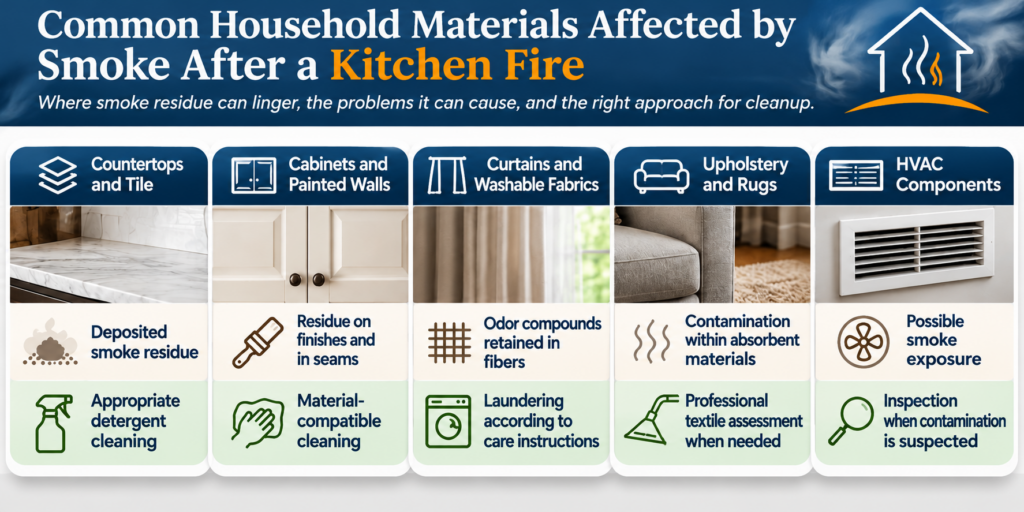
Removing smoke particles from the air is not the same as removing smoke contamination from household materials.
While cigarette smoke and kitchen-fire smoke differ, both demonstrate why surface appearance alone cannot establish whether contamination has been removed.
Smoke residue can remain in building materials even after visible staining has been removed. For a closer look at why smoke contamination can be difficult to eliminate, read our article, Cigarette Smoke Contamination: What Home Renovations Can—and Cannot—Remove.
Although cigarette smoke differs from kitchen-fire smoke, both can leave residues that require more than routine surface cleaning.
Five Steps to Remove Smoke Odor After a Kitchen Fire
Before cleaning, confirm the fire is completely extinguished and the property is safe. If firefighters responded, follow their instructions before reentering.
1. Ventilate the Area
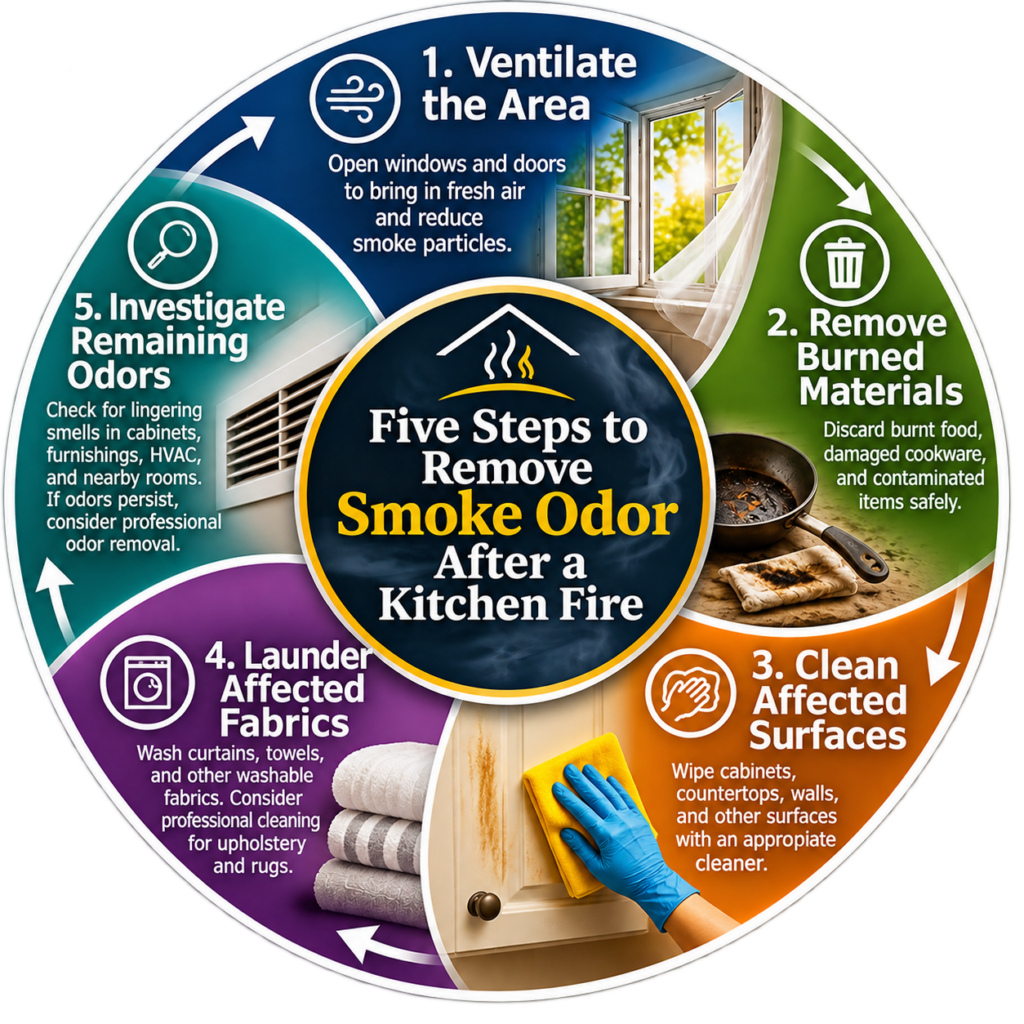
Open windows and doors when outdoor air quality and conditions permit.
Fresh-air exchange can reduce airborne pollutants and improve immediate odor conditions. However, ventilation alone cannot remove smoke residue already deposited on surfaces.
2. Remove Burned Materials
Once cleanup is safe, identify burned food, damaged cookware, and other contaminated items.
Photograph damage before disposal if an insurance claim may be necessary. Discard food and medications exposed to fire-related smoke, soot, or heat according to appropriate safety guidance.
3. Clean Affected Surfaces
For light contamination on suitable surfaces, damp wiping with an appropriate detergent may help remove smoke residue.
Pay particular attention to upper cabinets, shelving, and other overlooked areas.
Avoid dry brushing soot, which can redistribute particles. Heavy contamination, delicate finishes, and electrical equipment may require specialized cleaning.
4. Launder Affected Fabrics
Curtains, kitchen towels, washable rugs, and other fabrics may retain smoke-related odors.
Follow manufacturer care instructions. Upholstered furniture and other materials that cannot be safely washed may need professional attention.
5. Investigate Remaining Odors
After cleaning, assess whether the odor has improved.
Does the smell remain strongest near the kitchen? Is it noticeable inside cabinets? Does it return when the windows are closed?
These observations may help identify overlooked contamination.
If the odor persists, investigate the source before applying additional fragrances or cleaning chemicals.
A persistent odor doesn't always originate where you first notice it. Air movement, concealed building spaces, and environmental conditions can make an odor source difficult to locate.
What Should You Avoid After a Kitchen Fire?
Some common cleanup mistakes can create additional problems.
- Don't mix cleaning chemicals. Combining bleach with ammonia or acidic cleaners can release dangerous gases.
- Don't operate damaged appliances. Have potentially affected electrical or gas equipment evaluated before use.
- Don't dry-brush heavy soot deposits. This may spread contamination into the air.
- Don't rely on air fresheners. Fragrances can mask odors without removing their source.
- Don't use ozone generators in occupied spaces. The EPA warns that ozone can harm respiratory health and react with other indoor chemicals.
When substantial soot, structural damage, or electrical hazards are present, qualified fire restoration professionals should address those conditions before odor treatment.
When Is Professional Smoke Odor Removal Necessary?
A minor cooking incident may resolve with ventilation and appropriate cleaning. Professional assessment becomes more valuable when:
- Smoke odors remain after thorough cleaning.
- The smell extends into adjoining rooms.
- Furniture or fabrics continue retaining odors.
- Contamination may be present in inaccessible areas.
- A rental property needs additional evaluation before occupancy.
Professional odor treatment should focus on identifying remaining odor sources and determining appropriate treatment options.
Carolina OdorPros provides professional smoke odor removal services for homeowners and property owners throughout the Charlotte area.
Where fire damage requires structural repairs, extensive soot cleanup, or other restoration work, those services should be completed or coordinated with qualified fire restoration professionals.
Frequently Asked Questions About Kitchen Fire Smoke Odor Removal
1. How long does smoke odor last after a small kitchen fire?
Smoke odor may improve quickly after a minor incident, but it can persist for days, weeks, or longer when contaminated materials remain untreated.
The duration depends on what burned, how much smoke was produced, where it traveled, and whether affected surfaces were adequately cleaned.
A persistent smell does not necessarily mean extensive damage occurred. However, time alone does not guarantee that smoke residue or odors will disappear.
2. Is it safe to stay in a house that still smells like smoke?
Smoke odor alone cannot determine whether a home is safe to occupy.
Smoke can contain fine particles, gases, and other potentially harmful substances. The types and concentrations depend on the materials involved and the severity of the fire.
Before resuming occupancy, ensure the property has been cleared for safe use and that damaged appliances, significant soot contamination, and other hazards have been addressed.
People with respiratory conditions, children, and older adults may be especially sensitive to smoke-related pollutants.
If substantial contamination remains or occupants experience symptoms, seek appropriate professional guidance.
3. Why does my house still smell smoky after I've cleaned everything?
Smoke residue may remain on surfaces or within materials that ordinary cleaning did not reach.
Potential sources include cabinet interiors, ceiling surfaces, curtains, upholstery, and other absorbent materials.
Certain odor-producing compounds may also be retained by household materials and released over time.
If the smell returns after ventilation, the next step is to investigate remaining contamination rather than repeatedly applying air fresheners.
4. Will vinegar, baking soda, or air purifiers eliminate smoke odor?
Not necessarily. These approaches have different limitations.
Vinegar and baking soda may help with certain household cleaning or localized odor problems, but neither is a proven comprehensive treatment for widespread smoke contamination.
HEPA air purifiers can capture airborne particles but do not independently remove gaseous odor compounds or deposited residue.
Activated carbon filtration may reduce some gaseous pollutants, although performance depends on the filter design, carbon quantity, and pollutants involved.
Effective smoke odor removal generally requires addressing contaminated materials, not simply treating the surrounding air.
5. Can smoke from a kitchen fire enter the HVAC system?
Yes. Smoke can reach HVAC return-air pathways and potentially expose filters or system components, particularly if the system was operating during the incident.
However, not every small kitchen fire requires professional duct cleaning.
Start by checking affected filters according to manufacturer instructions. Consider professional HVAC inspection when visible residue, confirmed system exposure, or persistent system-associated odors suggest contamination.
The EPA does not recommend routine duct cleaning without an established need.
Your HVAC system can also influence how odors move throughout your home. To better understand the relationship between air circulation and persistent household smells, explore The Hidden Connection Between Home Heating Systems and Persistent Household Odors.
Not every odor that appears when the system runs originates inside the ductwork, which is why identifying the actual source matters.
6. When should I hire a professional smoke odor removal company?
Consider professional assessment when appropriate ventilation, surface cleaning, and laundering have not resolved the smell.
This is particularly relevant when odors extend into multiple rooms, remain in furnishings, or appear to originate from inaccessible materials.
A professional can evaluate the situation and discuss whether additional cleaning, specialized odor treatment, or replacement of affected materials may be appropriate.
For homeowners in the Charlotte area, Carolina OdorPros' Smoke Odor Removal Services offer a starting point for addressing persistent smoke-related odors.
The Fire May Be Over. The Odor Doesn't Have to Stay.
A small kitchen fire can be unsettling, especially when the smell remains long after the flames are extinguished.
Fortunately, lingering smoke odor does not automatically mean every affected material needs replacing.
Understanding where smoke contamination may remain, choosing appropriate cleaning methods, and recognizing when professional treatment is warranted can help homeowners make informed decisions.
Still noticing smoke odor in your Charlotte-area home?
Carolina OdorPros can help you explore professional odor removal options for persistent smoke smells.
Carolina OdorPros helps Charlotte-area homeowners address persistent smoke odors with professional odor removal solutions designed to tackle the source—not just cover up the smell.
Stop Living With Lingering Smoke Odors — Contact Carolina OdorPros
Serving Charlotte, NC, and surrounding communities.
Get Professional Smoke Odor Help