

Pet Odors in Rental Properties: What Landlords Need to Address Before Re-Renting
Estimated Reading Time: 7 minutes
Executive Brief
Pet odors in rental properties should be investigated and addressed before a new tenant moves in. Urine can penetrate carpeting, padding, subfloors, and other materials, leaving odors that routine cleaning may not resolve. For landlords and property managers, the most practical approach is to identify the source, assess affected materials, choose appropriate cleaning or remediation, and verify the results before advertising the property as ready for occupancy.
Key Takeaways
- Pet odors can remain in flooring and other materials after a tenant moves out.
- A clean-looking carpet does not necessarily mean the underlying padding or subfloor is unaffected.
- Professional odor assessment may prevent unnecessary replacement while identifying damage that cleaning alone cannot resolve.
- Landlords should verify the results of odor treatment before scheduling showings or welcoming new tenants.
Why Pet Odors Matter During Rental Property Turnover
A rental property can look beautiful in photographs, have freshly painted walls, and appear spotless during a walkthrough. But when a prospective tenant opens the front door, an unpleasant pet odor can immediately change their impression.
For landlords, lingering odors create a practical problem: Is the property truly ready for the next tenant, or is there an unresolved issue beneath the surface?
Pet urine, animal dander, and odors absorbed into household materials can remain after pets and their owners have moved out. Some problems respond to thorough cleaning. Others require investigation beneath flooring or around frequently affected areas.
The goal isn't to cover up the smell long enough to complete a showing. It's to understand what is causing it and address the problem appropriately.
Where Pet Odors Can Hide After a Tenant Moves Out
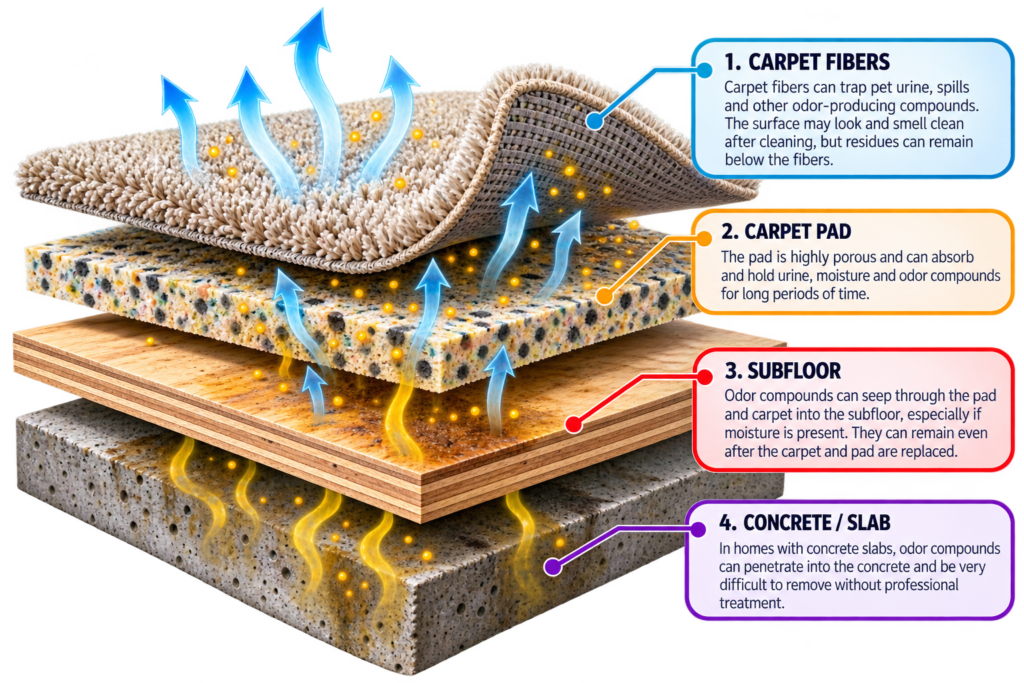
Carpeting, Padding, and Subfloors
Carpet is one of the first places landlords notice pet odors, but the visible surface may not reveal the full extent of contamination.
Repeated urine accidents can affect carpet fibers and backing, pass into the padding, and sometimes reach the subfloor beneath. Once that happens, surface cleaning may improve the carpet's appearance without resolving the underlying odor.
Pay particular attention to rooms where pets spent considerable time, corners, and areas near doors.
Landlords who want to understand this process in greater detail can read our guide to what happens when pet urine soaks into carpet and flooring.
Baseboards, Walls, and Flooring Edges
Not every pet accident happens in the middle of a room.
Urine marking can affect baseboards, lower wall surfaces, door frames, and flooring edges. Liquid may also enter seams or gaps that are difficult to reach during ordinary cleaning.
Inspect for staining, discoloration, damaged finishes, or persistent odors concentrated near these areas.
An odor near a wall does not automatically mean the wall must be replaced. It does mean the surrounding materials deserve closer examination.
Hard Flooring and Other Surfaces
Tile, sealed flooring, and other relatively nonporous surfaces may be easier to clean than absorbent materials. However, grout, seams, damaged finishes, and the underlying materials can complicate the situation.
Laminate or engineered flooring may also conceal contamination beneath planks or along edges.
Cleaning decisions should account for the actual flooring material and its manufacturer's care instructions.
HVAC Filters and Remaining Soft Materials
Pet hair and dander can collect in filters, vents, and any upholstered furnishings left behind.
These materials may contribute to stale indoor odors, although they should not automatically be assumed to be the source of a urine smell.
During turnover, inspect and replace HVAC filters as appropriate, clean accessible surfaces, and check any remaining fabrics or window coverings.
If the odor persists, continue investigating rather than assuming that the ventilation system is responsible.
How Landlords Should Evaluate Pet Odors Before Re-Renting
The most efficient approach is a structured inspection before beginning expensive repairs.
Step 1: Inspect the Property Before Deep Cleaning
Once the previous tenant has removed their belongings, walk through the property and note any noticeable odors, stains, or damaged materials.
Pay attention to:
- Carpeted rooms and flooring transitions
- Baseboards and lower wall surfaces
- Closets and enclosed spaces
- Areas where pets were regularly confined
- Previous accident locations, when known
Document visible conditions with photographs and written notes before cleaning or replacing materials.
This creates a useful maintenance record and helps distinguish routine turnover cleaning from work involving potentially damaged materials.
Step 2: Identify the Likely Odor Source
A general animal smell is different from a concentrated urine odor.
Pet hair, dander, and everyday household residue may respond to appropriate cleaning. Persistent urine odors may require a closer assessment of affected surfaces and underlying materials.
Avoid assuming that every unpleasant smell is caused by a previous tenant's pet. Plumbing, moisture, drains, and other building conditions can produce odors that require different solutions.
Step 3: Determine Whether Cleaning Is Enough
Cleaning may be appropriate when contamination is limited, accessible, and compatible with the affected material.
More extensive investigation may be needed when:
- Odor returns after appropriate cleaning and drying.
- Carpet padding appears heavily affected.
- Flooring edges or subfloors show signs of contamination.
- The source cannot be identified.
- Multiple areas of the property have persistent odors.
Replacing carpet is not always necessary, but cleaning is not always sufficient.
The right decision depends on the condition of the carpet, padding, and materials beneath it. Our article on whether carpet should be replaced after pet urine explains the considerations in more detail.
Step 4: Address the Source Before Cosmetic Improvements
Painting, installing new flooring, or using fragrance products before investigating an odor can create additional work if the underlying problem remains.
The U.S. Environmental Protection Agency identifies source control as a primary strategy for improving indoor air quality. Ventilation and filtration can help manage indoor contaminants, but they do not replace addressing a persistent source.
For rental turnover, that means resolving known contamination before completing cosmetic improvements whenever practical.
Step 5: Verify the Results Before Showing the Property
After cleaning or remediation, allow treated materials to dry and follow the applicable product or service instructions.
Then reassess the property under normal indoor conditions.
Walk through affected rooms, inspect previously identified problem areas, and check whether the odor remains noticeable.
If the smell returns, investigate further before declaring the issue resolved.
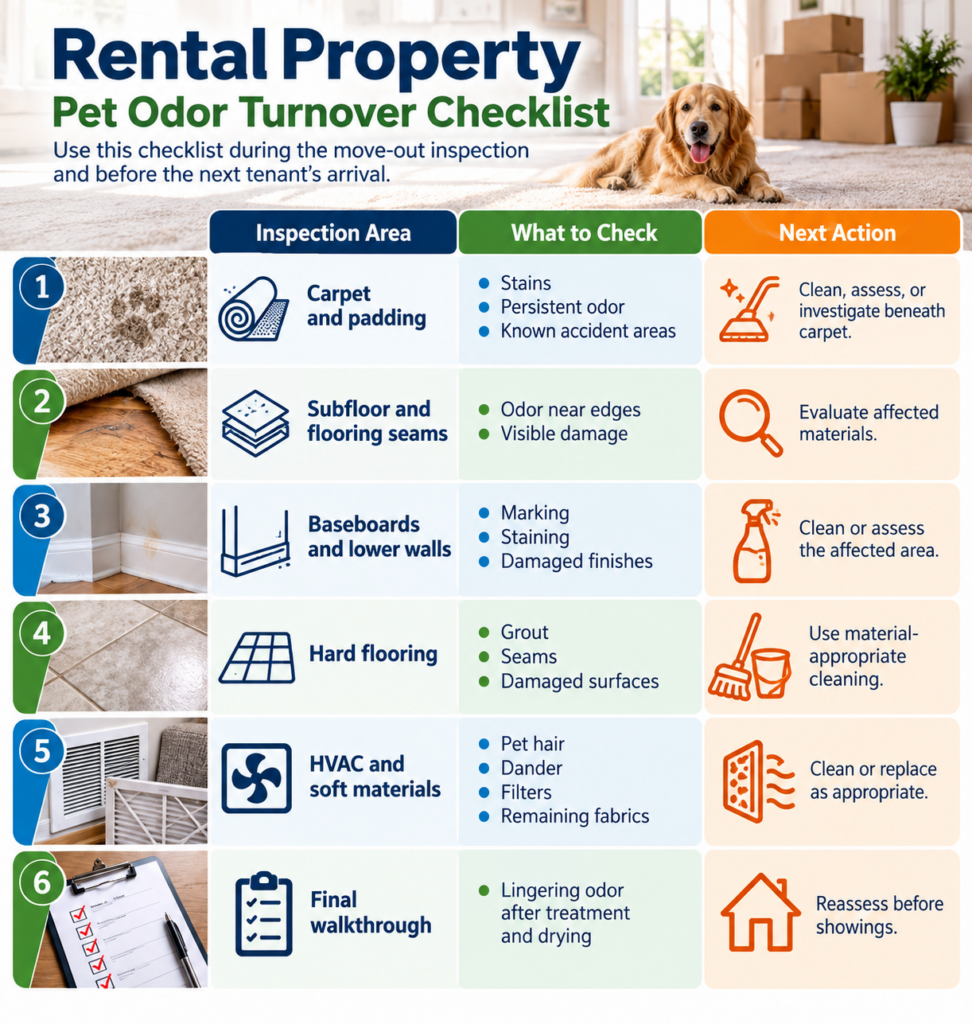
Property management tip: Record what was inspected, what work was completed, and whether follow-up evaluation was necessary. Keep documentation consistent with your normal property maintenance procedures.
Cleaning, Remediation, or Replacement: How Do You Decide?
Not every rental property needs extensive remediation, and not every affected material must be replaced.
The most sensible choice depends on the source, the extent of contamination, the condition of the materials, and whether an appropriate treatment can reach the affected area.
| Situation | Practical next step |
|---|---|
| Light general pet odor without identified urine contamination | Thorough cleaning and reassessment |
| Localized urine odor on an accessible surface | Material-appropriate cleaning and follow-up |
| Odor that persists after cleaning | Professional source assessment |
| Suspected contamination beneath carpet | Evaluate padding and subfloor before deciding |
| Severely damaged or unsalvageable materials | Consider selective removal and replacement |
A professional assessment can help landlords avoid replacing materials unnecessarily. It can also reveal when surface cleaning is unlikely to address the full problem.
The objective is to choose the appropriate solution—not automatically the most expensive one.
When Professional Pet Odor Removal Makes Sense
Rental-property turnover often involves several contractors, maintenance tasks, and scheduling decisions happening at once.
If pet odors remain after appropriate cleaning, identifying the source early can help property managers plan the remaining work more effectively.
Carolina Odor Pros provides pet odor removal services for homes and rental properties in the Charlotte area and surrounding communities in North and South Carolina.
The company's published services specifically address persistent pet odors in apartments and rental houses, including urine-related smells that remain after occupants move out.
For landlords, professional evaluation can be particularly useful when the odor source is uncertain, flooring may be affected beneath the surface, or previous cleaning attempts have not resolved the problem.
An assessment can help determine the appropriate next step. Treatment options and results depend on the property's actual conditions.
Frequently Asked Questions
1. Should landlords replace carpet after tenants with pets move out?
Not automatically. Carpet replacement should depend on its condition, the extent of contamination, and whether appropriate cleaning or remediation can address the problem. If urine has affected padding or subfloor materials, those areas may require separate treatment or replacement.
2. Can a landlord show a rental property while pet odors are still present?
A landlord may be able to conduct showings, subject to applicable requirements, but unresolved odors can create a poor impression and may raise questions about property condition. It is generally better to investigate and address persistent odors before marketing the unit as move-in ready.
3. Why does a rental property still smell like pets after professional carpet cleaning?
The odor source may extend beyond the carpet fibers into padding, subflooring, flooring seams, or other materials. It is also possible that another source is contributing to the smell. A focused assessment can help determine why the odor persists.
4. Can landlords charge tenants for pet odor removal?
Responsibility for cleaning or damage costs depends on the lease, documented property condition, applicable state law, and whether the condition exceeds ordinary wear and tear. Landlords should maintain appropriate records and review North Carolina or South Carolina requirements before making deductions or charges.
5. How soon should a landlord schedule pet odor treatment after a tenant moves out?
Ideally, assess suspected odors early in the turnover process, before installing new flooring, repainting affected areas, or finalizing the next move-in date. The time needed for cleaning or remediation depends on the materials involved, the extent of contamination, and any required drying or follow-up work.
Your Next Tenant Deserves a Fresh Start. So Does Your Property.
You've got enough to manage between tenants. Lingering pet odors shouldn't leave you guessing whether the carpet needs replacing or whether cleaning will be enough.
At Carolina Odor Pros, Sheldon understands how important it is to get your property ready for its next occupant. We'll help you identify the source of stubborn pet odors, understand your options, and determine the most practical next step.
Have a Rental Property With a Lingering Pet Odor?
You have enough to coordinate between tenants. An unresolved odor shouldn't become another guessing game.
Carolina Odor Pros helps landlords and property managers investigate persistent pet odors and explore appropriate removal solutions.
Whether you're preparing a single rental home or managing multiple properties, we're here to help you determine the next step.
Contact Carolina Odor Pros to Schedule an Odor Assessment
Serving Charlotte and surrounding communities in North and South Carolina.